 The NDS (ANSI/AWC NDS) under the IBC / IRC
Design SmartLam CLT to the NDS
SPEC Toolbox designs SmartLam cross-laminated timber to the NDS (ANSI/AWC NDS) under the IBC and IRC, using the ASD reference design values of ICC-ES ESR-4733 (rated to ANSI/APA PRG-320). The integration covers five CLT grades (V1M2, V2M5, V4M1, V5M1 and V5M2) in SPF, Hem-fir and Douglas fir-Larch, in balanced and unbalanced layups 4-1/8 to 12-3/8 in. thick and up to 52 ft long, for load-bearing floors, roofs and walls. The panel values are taken from the integrated database.
Start Designing for Free SmartLam ICC-ES ESR-4733; reissued December 2024 (renewal December 2026); incl. California and Los Angeles supplements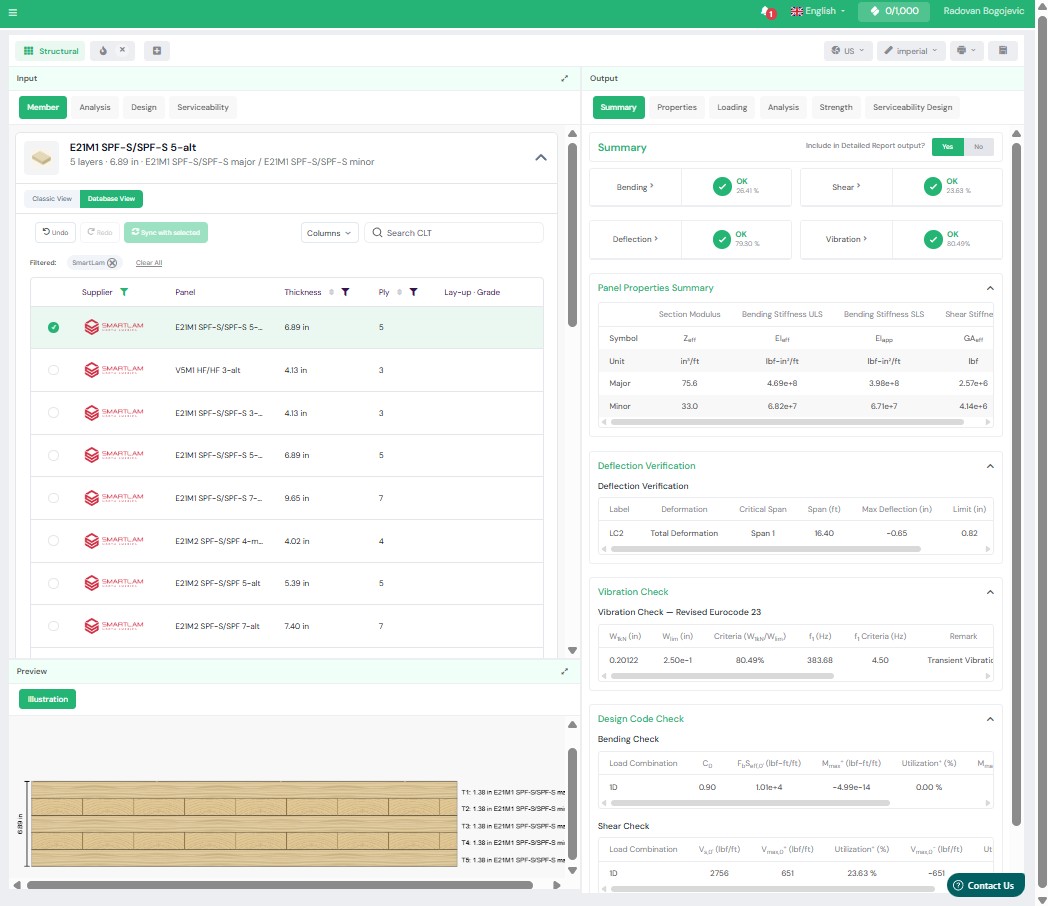

Designing SmartLam CLT to the NDS
SmartLam (SmartLam, LLC, Columbia Falls, Montana) manufactures cross-laminated timber. In the US it is recognized under ICC-ES ESR-4733, rated to ANSI/APA PRG-320. SPEC Toolbox designs the panels to the NDS, in allowable stress design.
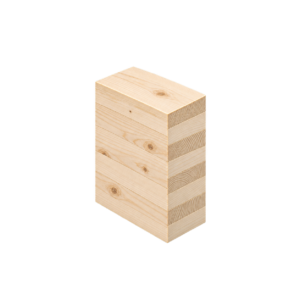
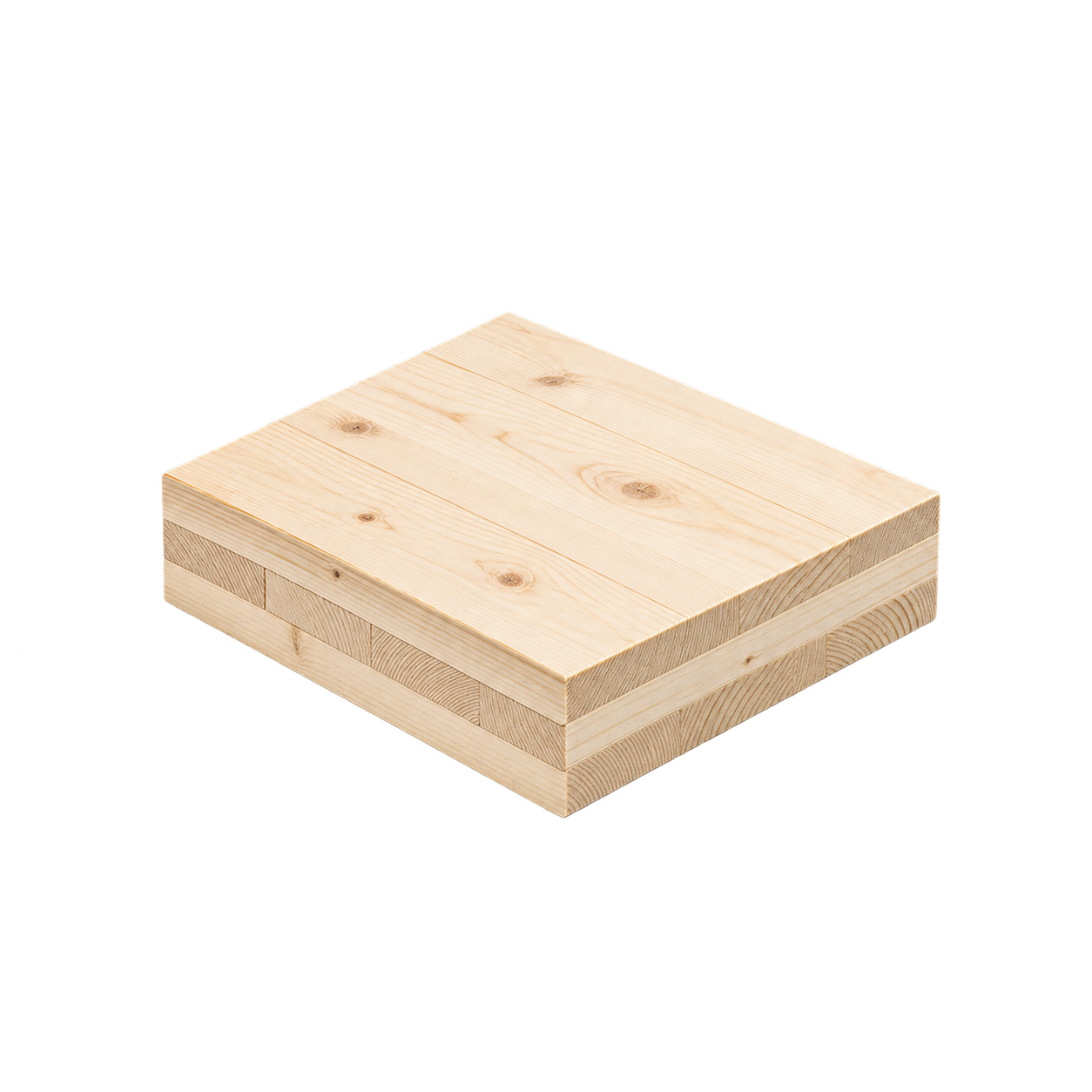
The integration covers SmartLam CLT, at least three planed softwood laminations glued crosswise and face-bonded with a non-formaldehyde polyurethane structural adhesive.
At a glance, in the US scope the SmartLam panels support:
The SmartLam panels are available across the SPEC Toolbox CLT modules, worked in ASD to the NDS:
and in the connection modules:
Panel behaviour is taken from the integrated database with the reference design values of ESR-4733, using the grade specific gravity for fastener design.
Design follows the ANSI/AWC NDS under the IBC and IRC. ICC-ES ESR-4733 publishes ASD reference design values for SmartLam CLT, rated to ANSI/APA PRG-320: effective bending capacity, bending and shear stiffness, and shear, in the major and minor directions, for the five grades in balanced and unbalanced layups. These are adjusted per NDS Table 10.3.1, without the lumber size or flat-use factor, with a creep factor of 2.0 applied to long-term deflection. The laminations are SPF, SPF-South, Hem-fir or Douglas fir-Larch, the basis for connection design per the NDS. The unbalanced layups are for walls and simple spans and are stamped TOP on the compression side. The evaluation is for dry service (in-service moisture content below 16 percent); fire resistance is determined by calculation per NDS Chapter 16 or by test to ASTM E119. The panels also carry California and Los Angeles building-code supplements.
“As we move in with our partners at SPEC Toolbox, this allows companies entering the mass timber market to design with ease using our products in glulam and CLT, and to design connections that are off the shelf and readily available, dropped straight into the customer’s drawings. SPEC Toolbox helps address one of the biggest issues in the industry: newer structural engineers designing with mass timber tend to be more conservative than required, which often makes a project not pencil out. SPEC Toolbox allows straightforward, accepted, repeatable connections and product specifications to be easily dropped into a project.”
— Steve Tolnai, SVP of Sales and Marketing, SmartLam North America
It is written against ICC-ES ESR-4733, reissued December 2024 (subject to renewal December 2026), including its California and Los Angeles supplements. Values are re-checked against the report at its next reissue before the integrated data changes.
Five CLT grades – V1M2 (Douglas fir), V2M5 (SPF), V4M1 (SPF-South or Hem-fir), V5M1 (Hem-fir) and V5M2 (Select Structural Hem-fir) – in balanced and unbalanced layups, 4-1/8 to 12-3/8 in. thick, in panels up to 10 ft wide and 52 ft long.
Load-bearing floors, roofs and walls, in allowable stress design (ASD), in dry service (in-service moisture content below 16 percent).
Free, browser-based, no download. Design any certified connection into your real materials in seconds.
Start Designing For Free →Get your products in front of every engineer specifying on the platform — at the point of design.
Get Your Products Specified →
Get the latest updates, tools, and resources for smarter timber design—straight to your inbox.

© 2026 SPEC Toolbox.
Website by Sanatan