

 the NDS (ANSI/AWC NDS) under the IBC / IRC
Design Binderholz CLT to the NDS
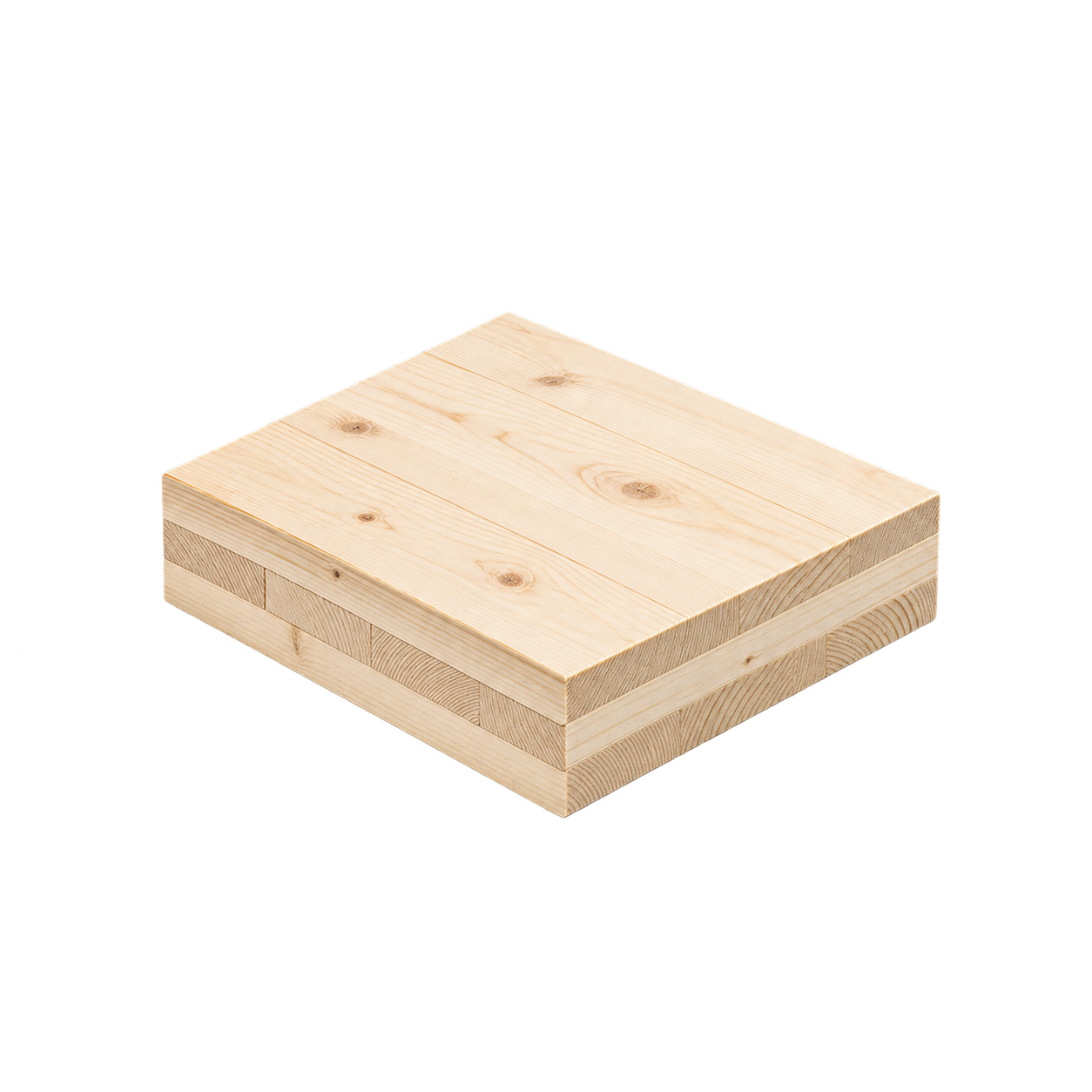
SPEC Toolbox designs Binderholz CLT BBS cross-laminated timber to the NDS (ANSI/AWC NDS) under the IBC and IRC, using the ASD reference design values of ICC-ES ESR-4081. The integration covers the BBS System Format and BBS XL panels, 3, 5 and 7-ply and about 2.4 to 11 in. thick, for load-bearing floors, roofs and walls, developed to ANSI/APA PRG-320. The panel values are taken from the integrated database.
Start Designing for Free Binderholz ICC-ES ESR-4081; reissued June 2024 (renewal June 2026); incl. California, Los Angeles, Chicago and Florida (HVHZ) supplements

The engineer's guide
Designing Binderholz CLT to the NDS
Binderholz (Binderholz Bausysteme GmbH) manufactures BBS cross-laminated timber. In the US it is recognized under ICC-ES ESR-4081, developed to ANSI/APA PRG-320. SPEC Toolbox designs the panels to the NDS, using the report’s reference design values, in allowable stress design.
Product range
The integration covers the Binderholz CLT BBS, cross-laminated sawn-softwood panels face-bonded with a formaldehyde-free polyurethane structural adhesive, in two formats.
- BBS System Format (BBS SYS): up to about 4 ft wide and 66 ft long, large-finger-jointed, spanning in the major strength direction.
- BBS XL: up to about 11.5 ft wide and 72 ft long.
- 3, 5 and 7-ply, from about 2.4 to 11 in. thick; laminations equivalent to SPF Select Structural with a minimum specific gravity of 0.42, evaluated to ANSI/APA PRG-320.
Compatibility
At a glance, in the US scope the Binderholz BBS panels support:
- Load-bearing floors, roofs and walls.
- Allowable stress design (ASD).
- Dry service (in-service moisture content below 16 percent).
- Compliance with the California, Los Angeles, Chicago and Florida Building Codes, including the High-Velocity Hurricane Zone.
What's distinctive
- Two formats, including very large panels. BBS XL panels reach about 11.5 ft wide and 72 ft long, and BBS System Format panels are large-finger-jointed for long spans in the major direction, for wide floor and roof plates with fewer joints.
- Reference design values in both directions. The report tabulates effective bending capacity, bending and shear stiffness, and in-plane shear in the major and minor directions, from laminations equivalent to SPF Select Structural (modulus of elasticity 1.5 x 10^6 psi, minimum specific gravity 0.42).
- Formaldehyde-free bond. The panels are face-bonded with a formaldehyde-free polyurethane structural adhesive conforming to ANSI/APA PRG-320.
- Broad US code coverage. The panels were evaluated to the California, Los Angeles and Chicago building codes and the Florida Building Code, including its High-Velocity Hurricane Zone provisions, through the report’s supplements.
In the platform
The Binderholz BBS panels are available across the SPEC Toolbox CLT modules, worked in ASD to the NDS:
- CLT floor, CLT wall and CLT shear wall.
and in the connection modules:
- the screw connection module and the panel-to-panel connection details (spline, butt joint and half-lap);
- CLT floor-to-glulam beam, CLT floor-to-floor and CLT wall-to-wall connections.
Panel behaviour is taken from the integrated database with the exact reference design values of ESR-4081.
Design codes
Design follows the ANSI/AWC NDS under the IBC and IRC. ESR-4081 publishes ASD reference design values for the BBS panels, developed to ANSI/APA PRG-320: effective bending capacity, bending and shear stiffness, and in-plane shear, in the major and minor strength directions. These are adjusted by the applicable NDS factors (Table 10.3.1) for the load case, without the lumber size factor, and a creep factor of 2.0 is applied to long-term deflection. The laminations are equivalent to SPF Select Structural with a minimum specific gravity of 0.42, which is the basis for connection design per the NDS. The evaluation is for dry service (in-service moisture content below 16 percent). The panels were also evaluated to the California, Los Angeles and Chicago building codes and the Florida Building Code, including its High-Velocity Hurricane Zone provisions, through the report’s supplements.
More from this partner
Other Binderholz Integrations
Why Binderholz builds on SPEC
“If we want to bring timber construction to a similar level where concrete is today, we need programs like SPEC Toolbox. Timber needs to be easy to calculate and easy to use. If every building in timber is treated as a special one off, it will never come out of the shadow and be used the way other materials are used.”
— Wolfgang Hebenstreit, Head of International Sales BBS (CLT), Binderholz
FAQs
How current is the Binderholz CLT data in SPEC Toolbox?
It is written against ICC-ES ESR-4081, reissued June 2024 (subject to renewal June 2026), including its California, Los Angeles, Chicago and Florida (High-Velocity Hurricane Zone) supplements. Values are re-checked against the report at its next reissue before the integrated data changes.
Which Binderholz CLT products are part of the integration?
The BBS cross-laminated timber in two formats: BBS System Format (up to about 4 ft wide and 66 ft long, spanning in the major direction) and BBS XL (up to about 11.5 ft wide and 72 ft long), 3, 5 and 7-ply, about 2.4 to 11 in. thick.
What can the panels be used for?
Load-bearing floors, roofs and walls, in allowable stress design (ASD), in dry service (in-service moisture content below 16 percent).
Free, browser-based, no download. Design any certified connection into your real materials in seconds.
Start Designing For Free →Get your products in front of every engineer specifying on the platform — at the point of design.
Get Your Products Specified →
Get the latest updates, tools, and resources for smarter timber design—straight to your inbox.





© 2026 SPEC Toolbox.
Website by Sanatan