 ISO 140 and ISO 140-8, rated to ISO 717
 Design with B&C acoustic flooring
SPEC Toolbox carries B&C Batten & Cradle acoustic flooring, a resilient raised timber floor tested over CLT to ISO 140 and ISO 140-8 and rated to ISO 717. A B&C acoustic cradle and LVL structural batten carry the floor finish over an insulated cavity, above a CLT floor with a resiliently mounted ceiling below; the integration carries the tested build-ups, with measured airborne ratings (Rw) to 69 and impact ratings (IIC) to 60, for floors in Australia and New Zealand.
Start Designing for Free Back to Batten & Cradle University of Auckland ATS · Test series T2210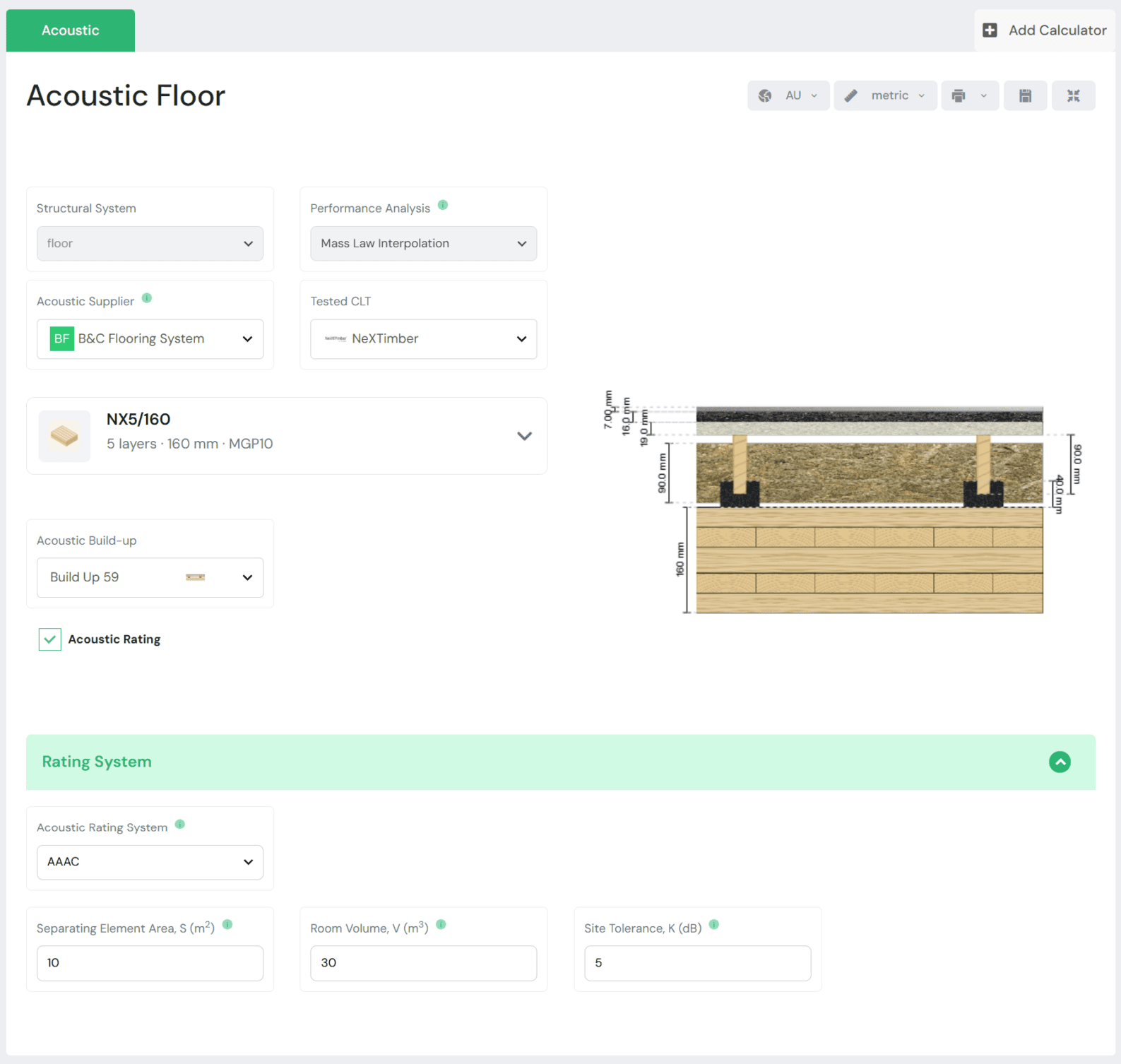


Designing with B&C acoustic flooring
B&C (Batten & Cradle Acoustic Flooring, New Zealand) supplies a resilient raised-floor acoustic system for airborne and impact sound insulation of timber floors. The system is tested over CLT to ISO 140 and ISO 140-8 and rated to ISO 717, and SPEC Toolbox carries the tested build-ups for acoustic floor design to the NCC and NZ Building Code.
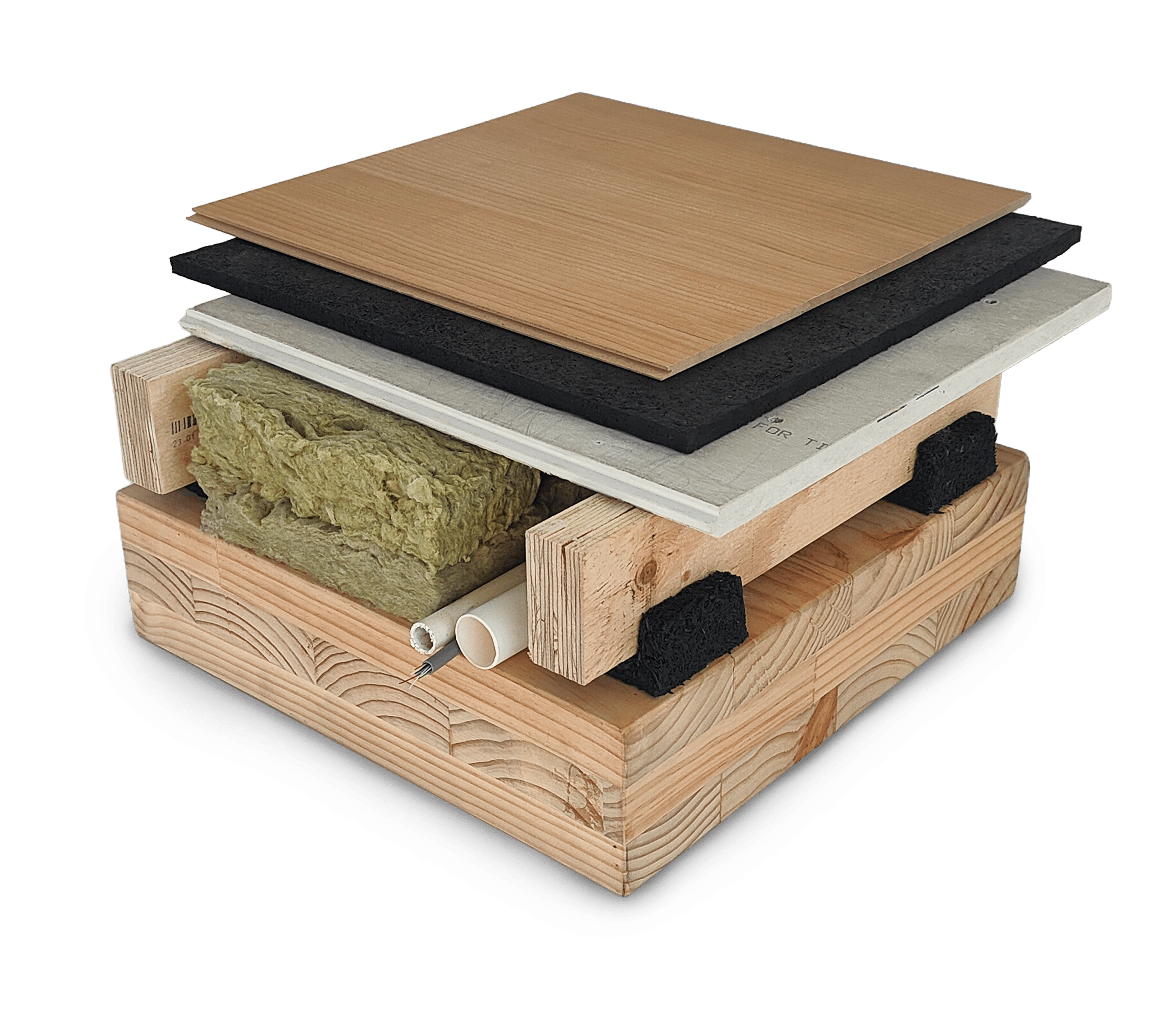
The integration covers the B&C Batten & Cradle acoustic floor build-up, assembled over a CLT floor from the following components.
At a glance, the B&C acoustic flooring supports:
The B&C acoustic flooring is available in the SPEC Toolbox acoustic floor design:
Panel behaviour is taken from the integrated database of tested build-ups (University of Auckland Acoustics Testing Service, series T2210); field performance depends on installation and flanking, which the acoustic consultant verifies.
Performance is established by laboratory test, not by structural calculation. The B&C build-ups over CLT were tested at the University of Auckland Acoustics Testing Service for airborne (ISO 140) and impact (ISO 140-8) sound insulation, rated to ISO 717, and reported with the weighted airborne sound reduction (Rw, with the C and Ctr spectrum adaptation terms and STC), the weighted normalised impact sound pressure level (Ln,w with CI) and the impact insulation class (IIC). Across the tested build-ups the airborne rating (Rw) ranges from about 50 to 69 and the impact rating from about IIC 41 to 60 (Ln,w about 69 down to 46), depending on the floor finish, cavity insulation, CLT thickness and ceiling. The ratings support NCC (Australia) and NZ Building Code compliance; field performance depends on the installed construction, perimeter isolation and flanking transmission, and trial on-site testing is recommended before full installation.
“We’ve spent years building our reputation in the conventional timber frame and concrete slab construction markets and now the CLT mass timber market, which is why we’ve partnered with SPEC Toolbox. We want to simplify the process for acoustic engineers and architects to design with confidence. Our systems don’t just meet the building code, they exceed it.”
— Peter Snowden, Director, Batten & Cradle
It is written against the SPEC Toolbox acoustic database (edition 6 February 2026) and the University of Auckland Acoustics Testing Service test reports (series T2210, ISO 140 and ISO 140-8, rated ISO 717). Values are re-checked against the reports before the integrated data changes.
A Batten & Cradle acoustic floor build-up: a floor finish (Strandfloor, particle board or James Hardie Secura) on 42 mm LVL B&C structural battens seated in B&C acoustic cradles, over an insulated cavity, above a CLT floor with a resiliently mounted GIB plasterboard ceiling below.
Measured over CLT, the tested build-ups reach an airborne rating (Rw) from about 50 to 69 and an impact rating (IIC) from about 41 to 60 (Ln,w about 69 down to 46), depending on the floor finish, cavity insulation, CLT thickness and ceiling.
Free, browser-based, no download. Design any certified connection into your real materials in seconds.
Start Designing For Free →Get your products in front of every engineer specifying on the platform — at the point of design.
Get Your Products Specified →
Get the latest updates, tools, and resources for smarter timber design—straight to your inbox.

© 2026 SPEC Toolbox.
Website by Sanatan


