the NDS (ANSI/AWC NDS) under the IBC / IRC
Design Simpson Strong-Tie Screws to the NDS
Structural engineers use SPEC Toolbox to design Simpson Strong-Tie Strong-Drive wood screws to the NDS (ANSI/AWC NDS) under the IBC and IRC, using the ASD and LRFD reference design values from ICC-ES ESR-3046, ESR-2236 and ESR-1472 and IAPMO-UES ER-192 and ER-262. The integration covers partially threaded, fully threaded, and subfloor and sole-plate screw families, for wood-to-wood and steel-to-wood connections in sawn lumber, glulam, structural composite lumber and the face of CLT.
Start Designing for Free Back to Anzor ICC-ES ESR-3046, ESR-2236, ESR-1472; IAPMO-UES ER-192, ER-262 — ESR-3046 (rev. Jun 2025); ESR-2236 (reissued Jan 2025); ESR-1472 (rev. May 2025); ER-192 (rev. Apr 2025); ER-262 (rev. Jun 2025)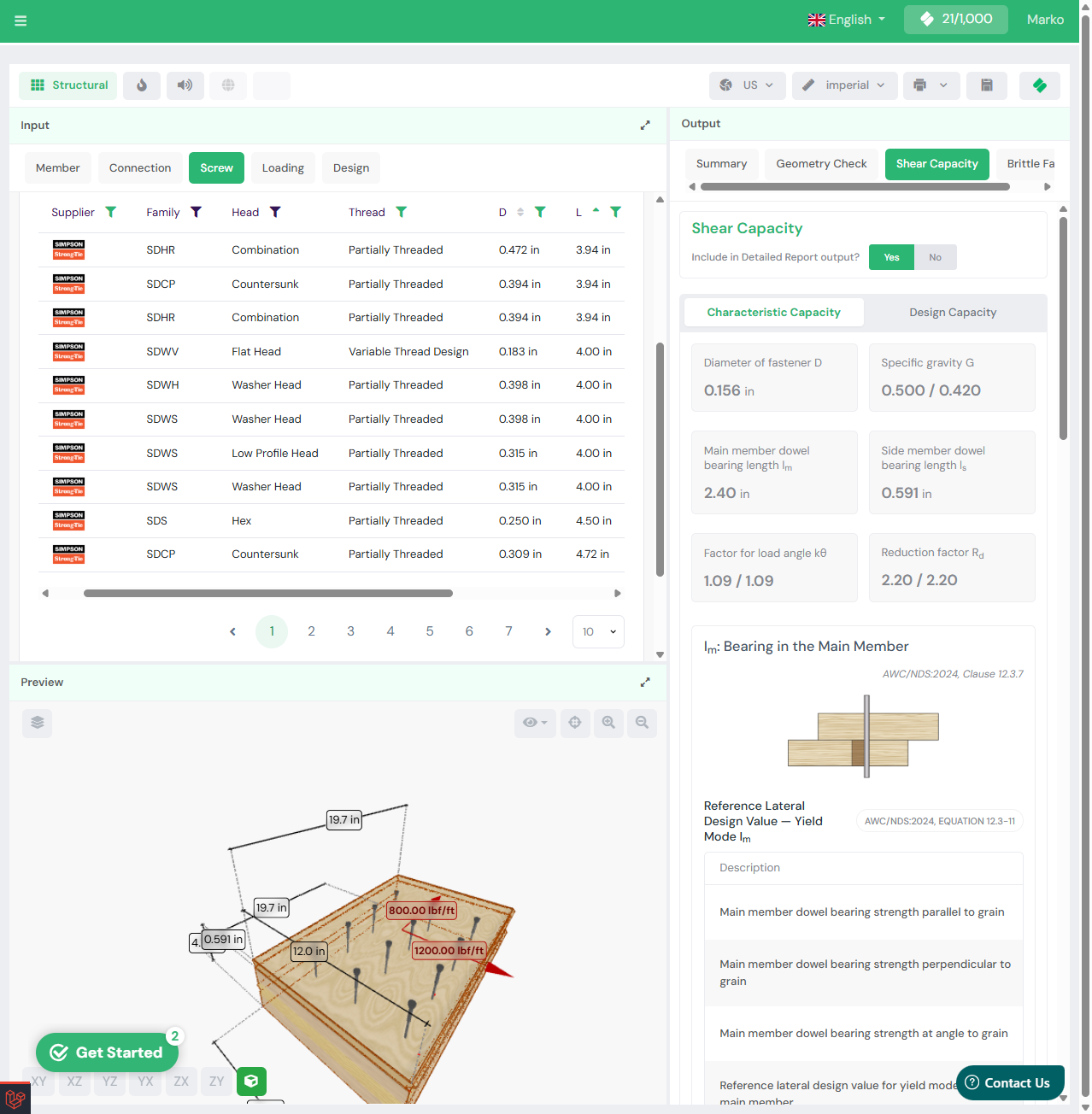


Simpson Strong-Tie is a US manufacturer of structural fasteners and connectors, with a broad Strong-Drive line of self-drilling wood screws. In the US, their screws are recognized under several evaluation reports: ICC-ES ESR-3046, ESR-2236 and ESR-1472, and IAPMO-UES ER-192 and ER-262, which publish reference design values for use with the ANSI/AWC NDS under the IBC and IRC. SPEC Toolbox designs the screws using those values, in both ASD and LRFD.
The US integration follows the Simpson Strong-Tie US database, grouped by role. Each family is backed by the evaluation report noted.
Partially threaded
Fully threaded
Subfloor and sole-plate
Double-thread
Screws are offered in zinc, mechanically galvanized, hot-dip galvanized, Double Barrier and Type 316 stainless finishes. Diameters and lengths are as listed in the reports.
At a glance, in the US, Simpson Strong-Tie families support:
The Simpson Strong-Tie US screws are available in the Screw module and in the connection detail calculators, worked in ASD or LRFD to the NDS:
Reference values are selected for the assigned specific gravity of the connected members, and end, edge and spacing requirements are applied per the NDS and the report geometry, including the separate predrilled and non-predrilled cases and the larger distances required in denser species such as Douglas fir.
Design follows the ANSI/AWC NDS under the IBC and IRC. The Simpson families are backed by ICC-ES ESR-3046, ESR-2236 and ESR-1472 and by IAPMO-UES ER-192 and ER-262, each publishing reference (allowable) design values in imperial units for withdrawal, head pull-through and lateral resistance; several also publish LRFD fastener strengths directly. Reference values are adjusted by the applicable NDS factors for the chosen method, among them load duration, wet service, temperature, group action, geometry and end grain, to give allowable (ASD) or design (LRFD) values. Reference values are keyed to the member’s assigned specific gravity (with lateral design limited to a specific gravity of 0.55 or less), and steel side members are designed per AISI S100 or AISC 360. The evaluation is for dry service; carbon-steel screws in saltwater exposure, and lateral design with inclined fasteners, are outside scope. The screws were also shown to comply with the City of Los Angeles code and the 2023 Florida Building Code, Building and Residential, including its High-Velocity Hurricane Zone provisions, through the reports’ supplements.
“Together, we are combining the world class testing and code compliance of Simpson Strong-Tie products with the intelligence and accessibility of SPEC Toolbox software, creating a seamless experience that helps engineers integrate our products directly into their mass timber designs.”
— Chris Crawford, Director, OEM and Mass Timber Market Segments, Simpson Strong-Tie
The integration follows the Simpson Strong-Tie US database, cross-checked against the evaluation reports it cites: ICC-ES ESR-3046, ESR-2236 and ESR-1472, and IAPMO-UES ER-192 and ER-262. Values are re-checked against each report at its next reissue before the integrated data changes.
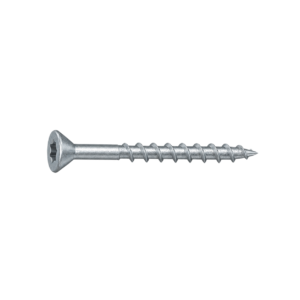
Grouped by role: the partially threaded SDWS, SDWH, SDCP, SDHR and SDS; the fully threaded SDCF, SDCFC and SDWC; the WSV subfloor and SDWV sole-plate screws; and the double-thread SWD.
Wood-to-wood and steel-to-wood connections in sawn lumber, structural glued laminated timber, structural composite lumber (LVL, PSL, LSL) and the face of CLT, in dry service. Carbon-steel screws in saltwater exposure are outside the scope of the reports.
Yes. The reports publish reference values that adjust to allowable (ASD) or design (LRFD) strengths, and the integration carries both so a connection can be checked in whichever method the project uses.
Free, browser-based, no download. Design any certified connection into your real materials in seconds.
Start Designing For Free →Get your products in front of every engineer specifying on the platform — at the point of design.
Get Your Products Specified →
Get the latest updates, tools, and resources for smarter timber design—straight to your inbox.

© 2026 SPEC Toolbox.
Website by Sanatan