
CLT Design Software for NDS/PRG320 Design
Design CLT floor, walls, fire & more, according to NDS 2018 and ANSI/APA PRG 320. Streamline your workflow for the leading mass timber suppliers in USA.
The Design of CLT in America
The IBC 2021 updates have ushered in a new era of “Tall Mass Timber” (Type IV-A, IV-B, and IV-C construction). However, designing Cross-Laminated Timber (CLT) requires navigating complex composite theory often missing from standard software packages.
The SPEC Toolbox CLT platform is built specifically for North American structural engineers. It automates the requirements of the National Design Specification (NDS), allowing you to specify ANSI/APA PRG 320 certified panels with confidence. From simple roof diaphragms to high-rise floor plates, this tool ensures your designs are safe, serviceable, and code-compliant.
What This Calculator Does
This tool performs a complete rational analysis of CLT panels under gravity loads, using the “Shear Analogy” or “Extended Gamma” methods permitted by the NDS. It checks:

Mises à jour de nos partenaires
La plateforme connaissant la croissance la plus rapide pour les spécifications relatives au bois
Key CLT Design Capabilities
Design of CLT Floors
Supplier & Code Integration
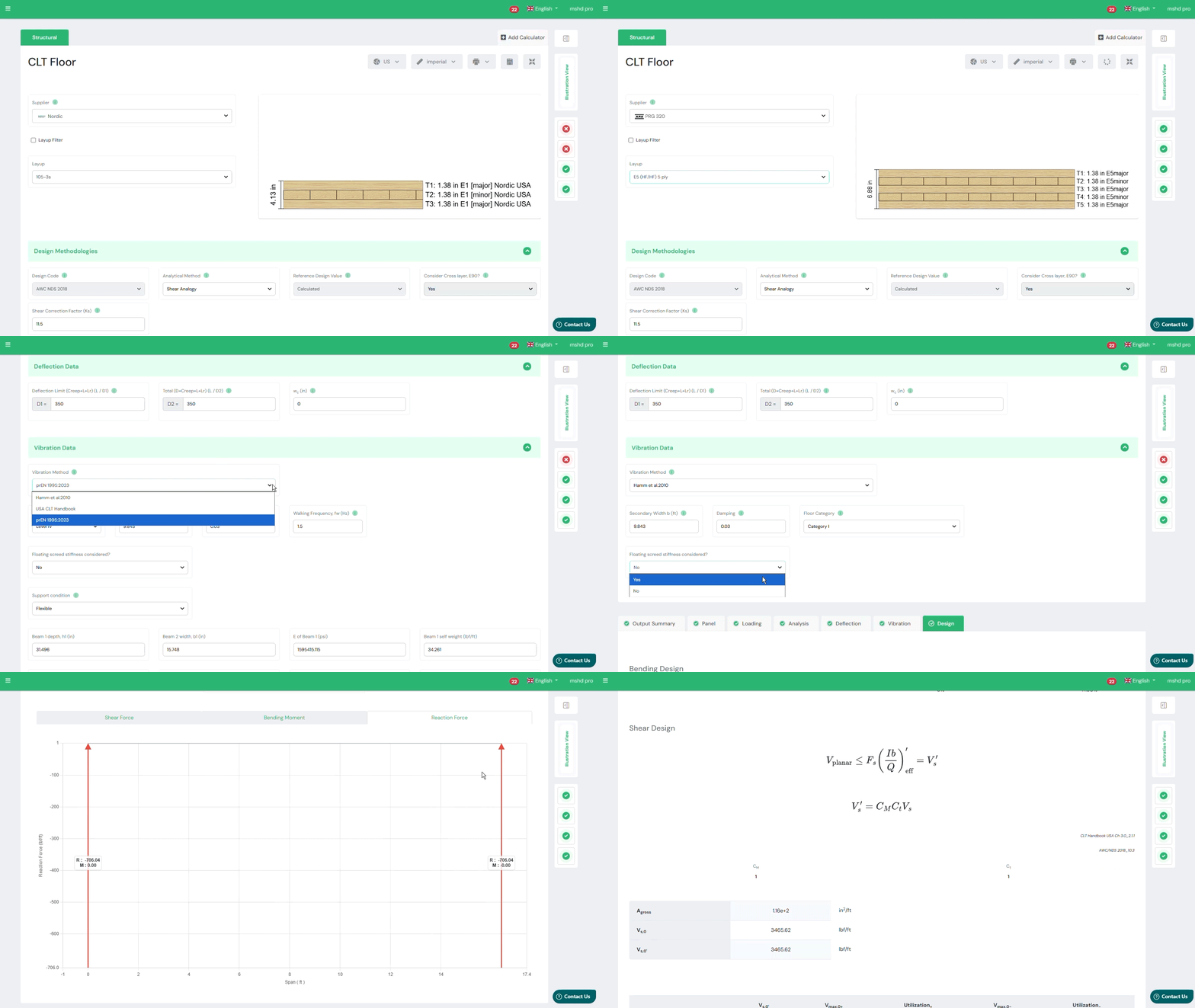
Effective CLT floor design starts with the correct application of U.S. timber material and load standards. Our platform integrates supplier data with AWC NDS requirements and ASCE 7 loading provisions, enabling fast and reliable structural verification.
Structural properties are based on standardized CLT material properties defined in ANSI/APA PRG 320, ensuring the design values used in the calculations are consistent with recognized manufacturing and product standards for cross-laminated timber.
Analytical Methods for CLT Stiffness
The determination of stiffness and strength properties for CLT panels can be performed using reference design values defined by standards or by analytical calculation methods.
• Supplier-Provided Values:
When reference design values are based on a specific manufacturer’s proprietary data, the strength and stiffness properties are extracted directly from the supplier’s technical product data sheets. This ensures the calculations reflect the exact characteristics of the selected CLT product.
• Standard Reference Design Values:
Reference design values may also be taken from ANSI/APA PRG 320, which defines standardized mechanical properties for designated CLT grades and layups under standard dry service conditions (moisture content below 16%). These values represent typical strength and stiffness parameters used for structural design in the United States.
Structural capacity is evaluated across two primary orientations:
-
Major Strength Axis: Parallel to the grain of the outer layers
-
Minor Strength Axis: Perpendicular to the grain of the outer layers
The reference design values include key structural parameters such as effective bending stiffness, bending moment capacity, shear stiffness, and shear capacity, which form the basis of structural verification for CLT floor systems.
High-Performance Vibration Design
Vibration is often the governing serviceability limit state for CLT floors. We have included recognized timber vibration methods such as Hamm et al. (2010) and guidance from the U.S. CLT Handbook, enabling reliable prediction of floor dynamic performance:
• Vibration Methods: Select between different vibration assessment approaches including Hamm et al. (2010), U.S. CLT Handbook recommendations, or prEN 1995-1-1:2023, allowing engineers to evaluate floor behavior using established research and design guidance.
• Performance Levels: Specify target floor performance levels using floor categories (e.g., Category I or Category II) to match building occupancy and comfort requirements.
This calculator goes beyond simple static deflection. The tool analyzes the Fundamental Frequency and dynamic response of the floor system, allowing you to tune the floor mass, damping, and participating width to meet strict vibration performance criteria, ensuring the “feel” of the floor matches the quality expectations of the building.

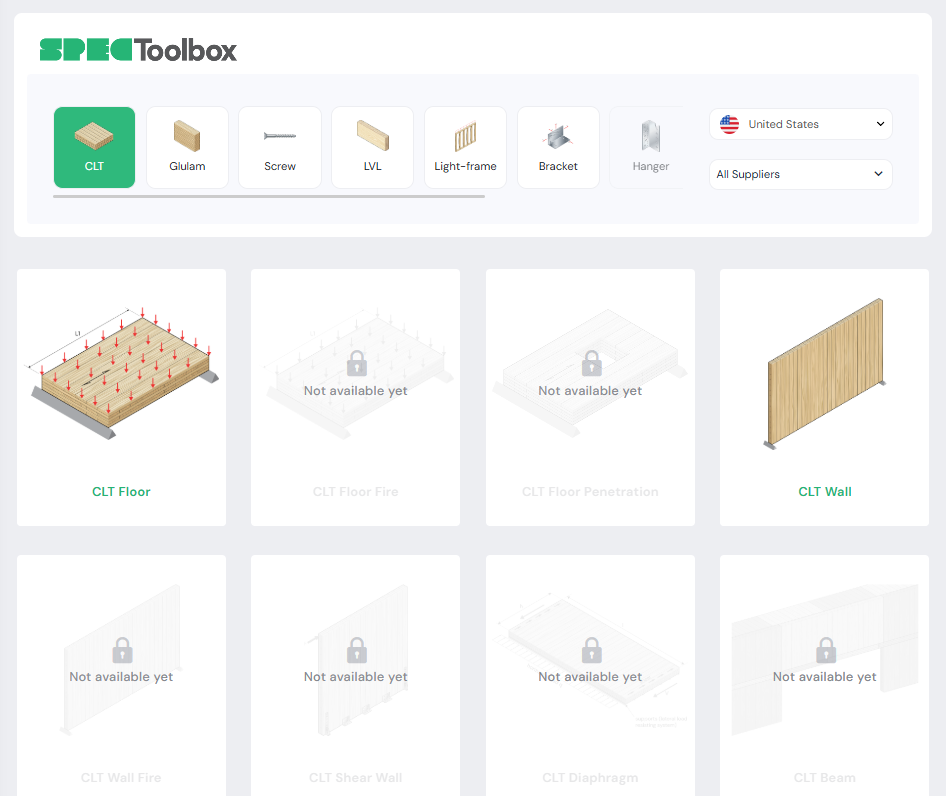
Design of CLT Fire
CLT Fire Design Calculators in under development and will be available in the soon.
Design of CLT Connections
CLT Connections Design Calculators in under development and will be available in the soon.
Design of CLT Shear Walls
CLT Shear Wall Design Calculators in under development and will be available in the soon.
The Ultimate CLT Design Platform for USA Structural Engineers
If you’re looking to design CLT on your next project, then SPEC Toolbox has you covered!
Tutorials
CLT Floor Panel Design
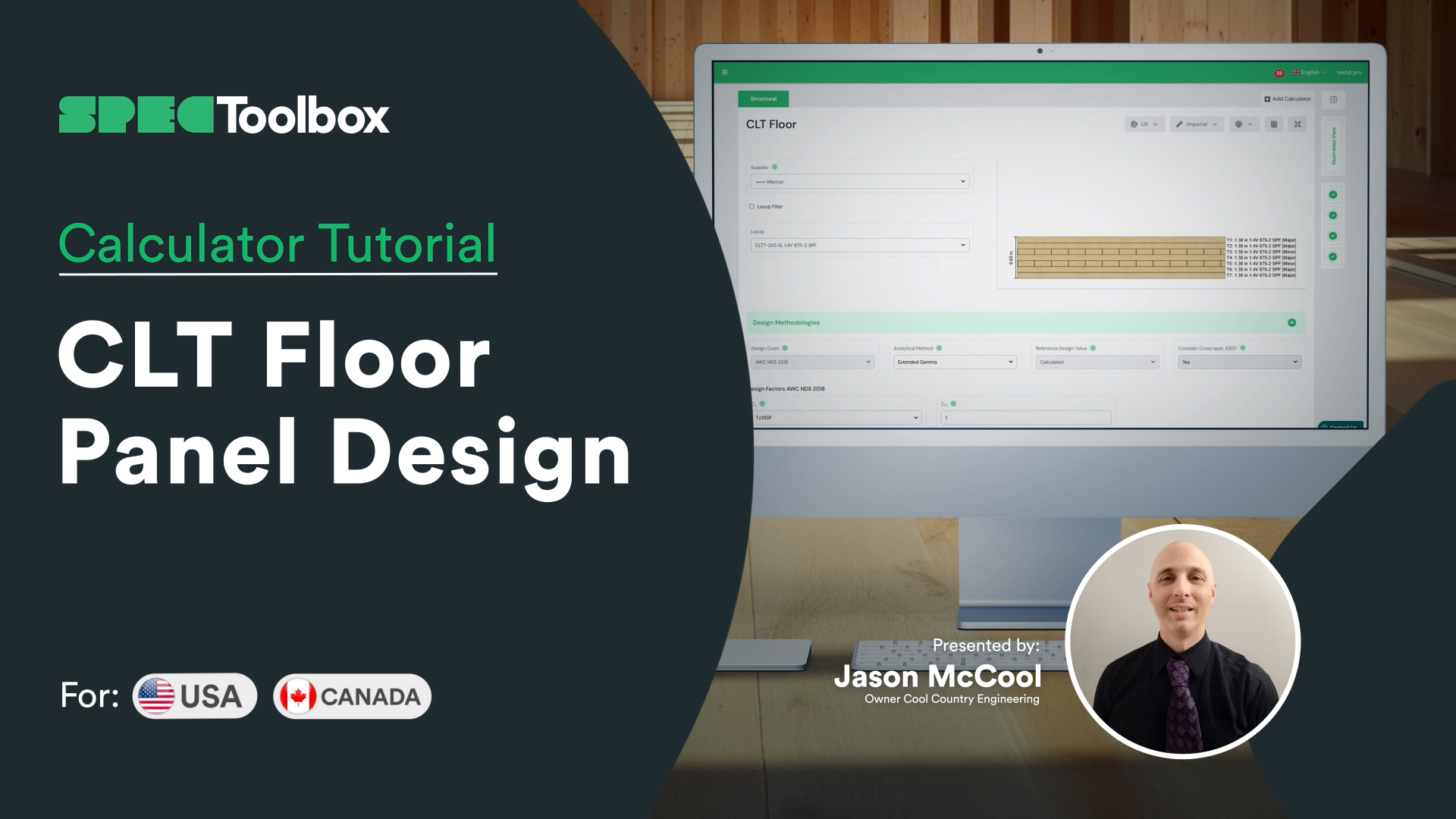
Design a 45 ft triple-span CLT floor in minutes with SPEC Toolbox: In this step-by-step demo, we show how to use SPEC Toolbox CLT Floor Calculator to design a mass timber office floor according to the US standards (AWC NDS), from setting spans and supports to adding loads, selecting suppliers/layups, applying deflection limits, and running vibration checks.
CLT Wall Panel Design
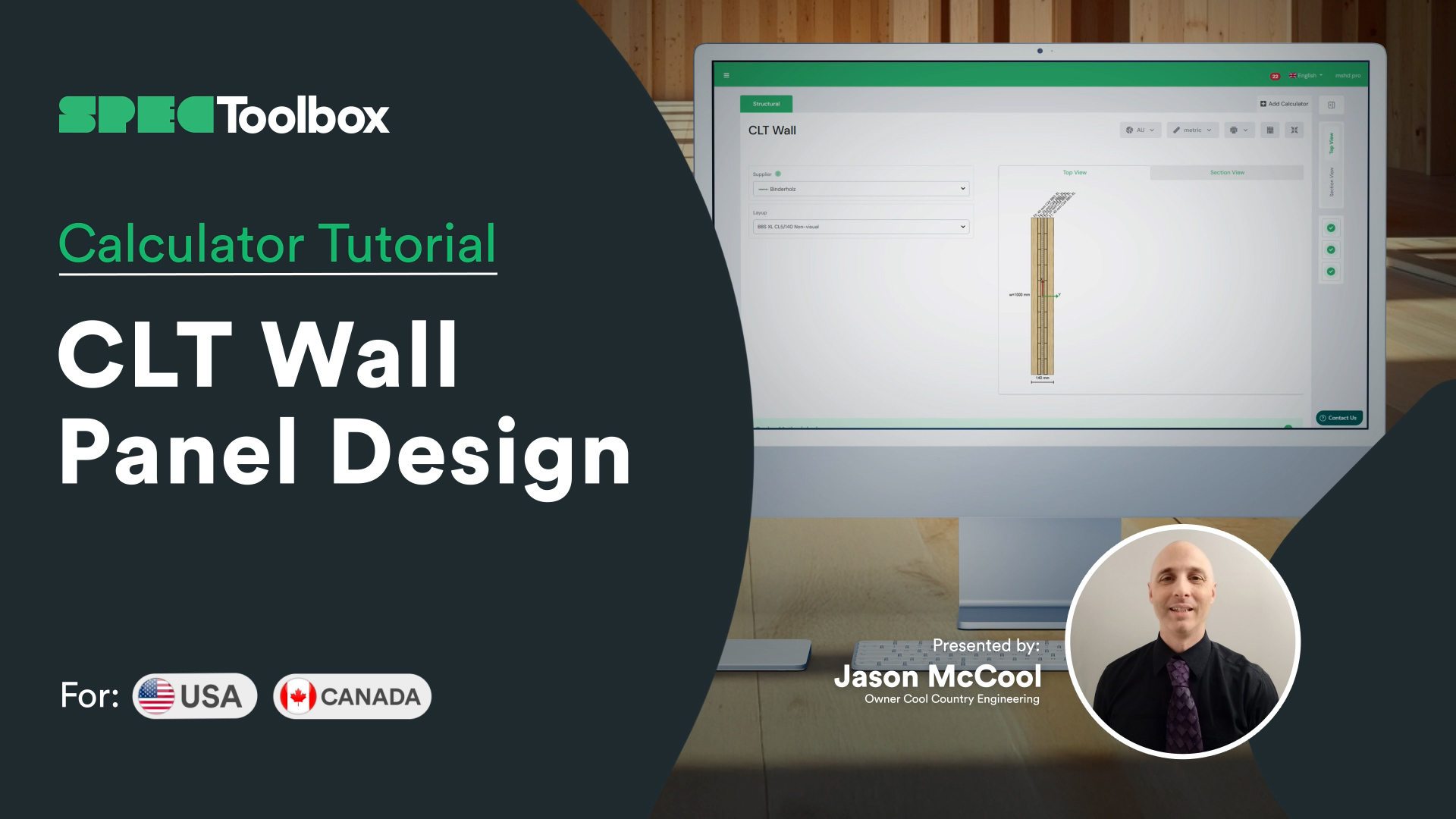
Check a 40′ balloon-framed CLT wall for gravity loads with SPEC Toolbox. In this demo, we use the CLT Wall calculator to verify a tall core wall under gravity loading. You’ll see how to set up panel geometry and intermediate restraint, enter loads per the design example, account for eccentricity using the USA CLT Handbook method (or manual inputs), and quickly review an extensive results summary to identify governing checks.
Frequently Asked Questions
Does this check Fire Design (Char Rate)?
This module covers Structural (Cold) Design. For fire compliance, please use our Char Rate Calculator, which utilizes NDS Chapter 16 to calculate the residual cross-section after a 1-hour or 2-hour fire exposure (FRR).
Can I use LRFD or ASD?
The current output focuses on ASD (Allowable Stress Design), which is the standard methodology for wood design in the NDS.
Does it support Southern Pine?
Yes. You can select Southern Pine (SPIB rules) for your custom layups, a popular choice for CLT manufacturing in the Eastern United States.






 Vis
Vis GLT
GLT Dowels
 CLT
CLT