
Dowel & Bolt Design Software for Eurocode 5
Design complex timber connections to Eurocode 5 (EN 1995) and second generation Eurocodes (prEN 1995:2025). Analyze Shear, Axial, and Moment actions on multi-plate configurations in seconds.
The "Hardest" Part of Timber Design, Solved
Connection design is often the bottleneck in mass timber engineering. The complexity of the Johansen Yield Equations, combined with strict spacing rules and brittle failure modes, makes manual calculation slow and error-prone.
The SPEC Toolbox Dowel & Bolt Module is a complete transformation of how engineers handle connection complexity. It moves beyond simple “Shear Capacity” to a true Combined Actions Analysis. Whether you are designing a double-shear truss node, a moment-resisting portal frame knee, or a heavy beam-to-column bracket, this tool provides instant verification to EN 1995-1-1 and prepares you for the future with FprEN 1995:2025 checks.
What This Calculator Does
This tool utilizes a dynamic visual engine to optimize dowels, bolts, and steel plates in real-time. It performs a rigorous analysis of:

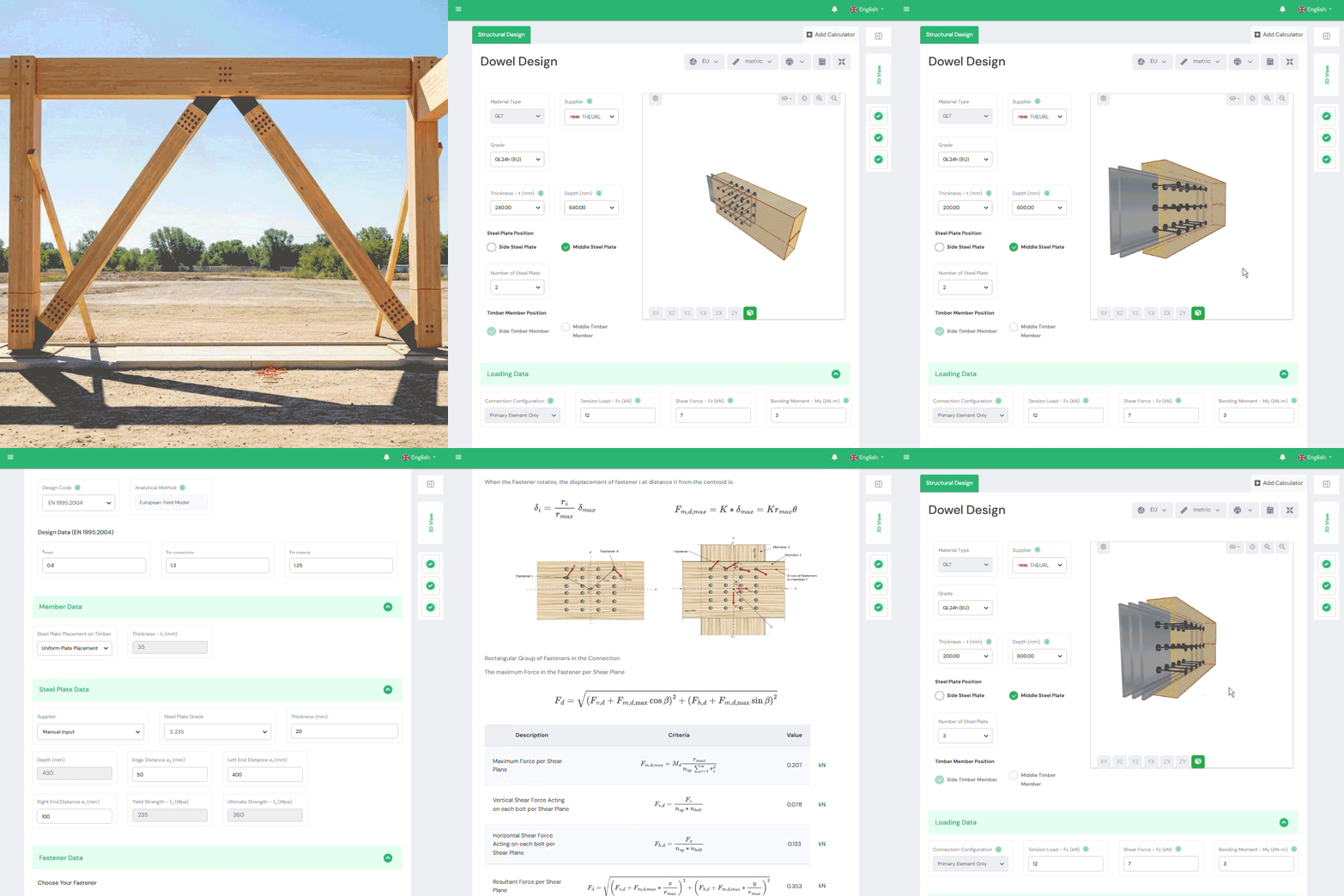
Key Dowel & Bolt Connection Design Capabilities
Overview of Dowel-Type Timber Connections
Dowel-type fasteners such as bolts and steel dowels are among the most widely used connection systems in structural timber engineering. These fasteners transfer forces between timber members through bearing stresses in the wood and bending of the fastener.
SPEC Toolbox provides an advanced calculator for the design and verification of dowel-type connections in timber elements with steel plates. The tool evaluates the interaction between timber members, steel plates, and fasteners, enabling engineers to verify connection capacity under combined loading conditions.
For the European region, the calculator supports the following design standards:
• EN 1995-1-1:2004 (Eurocode 5)
• prEN 1995:2025 (Next-generation Eurocode revision)
These standards define the design procedures for dowel-type fasteners using Johansen yield theory, spacing requirements, and timber failure checks.
The calculator supports bolts and steel dowels installed in glulam or solid timber members and allows flexible configuration of plate positions, fastener layouts, and loading conditions.
Applied Forces and Connection Configuration
The structural behavior of a dowel-type connection is governed by the forces acting on the joint. The calculator allows engineers to define the primary load components transferred through the connection.
The following loads can be applied:
• Axial Tension Force (Fx)
Force acting parallel to the connection axis that produces tension in the timber and fastener group.
• Shear Force (Fz)
Force acting perpendicular to the fastener axis and transferred through bearing between the timber and the fasteners.
• Bending Moment (My)
Moment applied to the connection that introduces additional force redistribution within the fastener group.
Engineers can also define the connection configuration, determining whether the connection acts as a primary structural element or as part of a larger load transfer system.
Yield Model Analysis for Dowel-Type Fasteners
The calculator evaluates dowel-type connections using Johansen Yield Theory, which forms the foundation for modern timber connection design in Eurocode 5.
This analytical approach considers the interaction between:
-
Timber embedment strength
-
Fastener bending resistance
-
Steel plate stiffness
-
Load redistribution within the fastener group
Multiple potential failure mechanisms are evaluated automatically, including:
-
Timber embedding failure
-
Fastener yielding
-
Combined timber-fastener plastic mechanisms
The design procedure applies material safety factors and modification factors defined by the selected design standard.
By evaluating all possible yield modes, the calculator determines the governing connection resistance and ensures reliable structural verification.
Timber Member Configuration
The timber member forms the primary structural component of the connection. Its geometry and material properties significantly influence the connection capacity.
Engineers can define:
-
Timber member thickness
-
Timber material grade
-
Steel plate placement within the timber section
-
Plate arrangement (uniform or non-uniform placement)
These parameters determine the load transfer mechanism and influence fastener spacing requirements, splitting resistance, and overall joint behavior.
Steel Plate Properties
Steel plates are frequently used in timber connections to improve load distribution and increase joint capacity.
The calculator allows engineers to define the mechanical and geometric properties of the steel plate, including:
-
Steel plate grade
-
Plate thickness
-
Plate depth
-
Edge distances
-
End distances
Material properties such as yield strength and ultimate strength are used to evaluate the structural resistance of the steel plate.
The system verifies the plate against potential failure mechanisms including:
-
Plate bending
-
Bearing capacity
-
Shear capacity
-
Block tearing resistance
-
Tension capacity
This ensures that the steel component of the connection remains structurally adequate.
Fastener Type and Mechanical Properties
Fasteners are the primary load-transferring elements within dowel-type timber connections. The calculator supports the design of:
• Bolts
• Steel dowels
Engineers can define the fastener characteristics, including:
-
Fastener diameter
-
Fastener grade
-
Number of fasteners per row
-
Number of rows
-
Fastener distribution pattern
-
Washer diameter
-
Installation angle
These parameters directly influence the fastener capacity, load distribution, and the governing connection failure mode.
Spacing and Edge Distance Requirements
Proper fastener spacing and edge distances are essential to prevent brittle timber failure modes such as splitting or block shear.
The calculator allows engineers to define:
-
Spacing along the grain (a₁)
-
Spacing across the grain (a₂)
-
Loaded edge distance (aₜ)
-
Unloaded edge distance (aₑ)
-
End distances
Engineers can either define these values manually or allow the calculator to apply minimum spacing requirements according to the selected design standard.
These geometric constraints ensure proper stress distribution and sufficient timber strength around the fasteners.
Automated Connection Capacity Checks
After defining the geometry, materials, and loads, the calculator performs a complete structural verification of the connection.
The following checks are automatically evaluated:
Geometric Verification
Ensures that spacing, edge distances, and layout requirements satisfy the design code provisions.
Timber Member and Fastener Checks
The connection is evaluated for multiple potential timber and fastener failure modes, including:
-
Fastener yielding resistance
-
Timber splitting resistance
-
Block or plug shear resistance
-
Net tension resistance of the timber member
Steel Plate Verification
The steel plate is verified against:
-
Tension capacity
-
Bearing resistance
-
Bending capacity
-
Shear capacity
-
Block tearing resistance
The results are presented in a clear output summary dashboard, allowing engineers to quickly identify governing failure mechanisms and verify whether the connection satisfies the design requirements.
Frequently Asked Questions
What is the difference between a Dowel and a Bolt?
In Eurocode 5, Bolts have nuts/washers and rely on the “Rope Effect” for extra strength. Dowels are tight-fitting smooth pins with no rope effect. Our calculator supports both, plus fitted bolts.
Does it check Block Shear?
Yes. Block Shear (tearing out a “chunk” of wood) is often the governing failure mode for groups of bolts loaded parallel to grain. We apply the rigorous checks from Annex A of Eurocode 5.
Is FprEN 1995-1-1:2025 supported?
Yes. We have integrated the latest draft provisions from the “Second Generation Eurocode,” allowing you to future-proof your designs or compare current EC5 results against the upcoming standard.






 CLT
CLT Dowels
 Viti
Viti GLT
GLT Staffe
 Light-frame