
CLT Design Software for Eurocode 5 | Engineering Platform
Launch the free CLT Floor Calculator below & verify your design in seconds!
CLT Design
The New Standard for European Mass Timber Engineering
CLT Design in Europe is transforming the skyline, yet for many structural engineers, the path to a compliant mass timber design is filled with technical roadblocks. Despite its prevalence, specialized CLT design software for Eurocode 5 is rarely taught at the university level, leaving a significant knowledge gap in the local industry.
Designing with the primary European timber code, EN 1995-1-1, presents a unique challenge: while the code provides the foundation, managing the complex layer-by-layer verification for CLT requires navigating national annexes and diverse manufacturer-specific data. This complexity forces engineers to use a verified CLT calculator to manually synthesize first principles with code-specific factors like kmod, ksys, and Ym.
The European Engineering Platform for CLT Design
This tool performs a complete structural analysis of CLT panels under gravity loads. It checks both Ultimate Limit State (ULS) and Serviceability Limit State (SLS) criteria:

Actualizaciones de nuestros socios
La plataforma de más rápido crecimiento para la especificación de madera
Key CLT Design Capabilities
Design of CLT Floors
Supplier & Code Integration
Effective CLT floor design starts with the correct application of Eurocode material and load factors. Our platform integrates supplier data with Eurocode 5 requirements, enabling fast and reliable structural verification.
Analytical Methods for CLT Stiffness
-
The Gamma Method: Best for standard, uniform CLT panels with 3, 5, or 7 layers. It accounts for the rolling shear deformation in the cross-layers by using a simplified efficiency factor.
-
The Extended Gamma Method: Our recommended method for thick panels (7-ply and above) or non-uniform layups. It provides a more refined calculation of effective stiffness by accounting for the rolling shear stiffness of every individual cross-layer, preventing overly conservative designs.
-
The Shear Analogy Method: The most rigorous analytical approach, suitable for highly complex or asymmetric layups. It treats the panel as a composite beam with distinct bending and shear stiffness components, providing the highest level of accuracy for all layup configurations.
High-Performance Vibration Design
Vibration is often the governing serviceability limit state for CLT floors. We have included the latest Eurocode drafts to provide a superior design outcome:
-
Support Conditions: Model realistic scenarios including stiff or flexible supports to accurately predict floor behavior.
-
Performance Levels: Specify target performance levels to meet specific building requirements, moving beyond simple frequency checks to holistic occupant comfort.
This calculator goes beyond simple static deflection. The tool analyzes the Fundamental Frequency (f1) and Impulsive Velocity Response, allowing you to tune the floor mass and stiffness to meet strict vibration criteria (e.g., 8Hz for offices), ensuring the “feel” of the floor matches the quality of the building.

Design of CLT Fire
Advanced CLT Fire Engineering
Structural fire design for mass timber is a critical component of any Eurocode-based structural verification and performance-based fire engineering solution.
SPEC Toolbox simplifies this complexity by offering multiple verification pathways aiding engineering judgement, ranging from the widely adopted ÖNORM B EN 1995-1-2:2011 (Austrian National Annex to Eurocode 5) to the cutting-edge prEN 1995-1-2:2023 (2nd Generation Eurocode). Whether you are utilizing a standard fire curve based on EN 1363-1 testing or project-specific fire test data, the platform calculates precise charring depths and residual load-bearing capacities, helping your CLT panels meet stringent Eurocode safety and structural integrity requirements.
Precision Charring & Bond-Line Integrity
Our engine accounts for the sophisticated physics of timber charring, moving beyond simple uniform rates. You can define the basic charring rate β₀ based on timber density and moisture content, and the platform automatically applies relevant Eurocode modification factors to determine notional charring rates βₙ. Crucially, our 2nd Generation Eurocode module explicitly models bond-line integrity and delamination effects, preventing the catastrophic loss of protection often ignored in simplified calculations for layered timber elements such as CLT.
Automated Factor Analysis for Performance Solutions
To provide total engineering transparency, SPEC Toolbox enables granular control over charring variables. The platform automates the calculation of Eurocode charring and protection factors, including parameters related to gaps, protection layers, and layer fall-off behaviour. This “No Black Box” approach allows engineers to either use code-specific default values or bypass them with manual inputs derived from manufacturer fire tests, creating a verified path from Eurocode first-principles calculations to project certification.

Design of CLT Connections
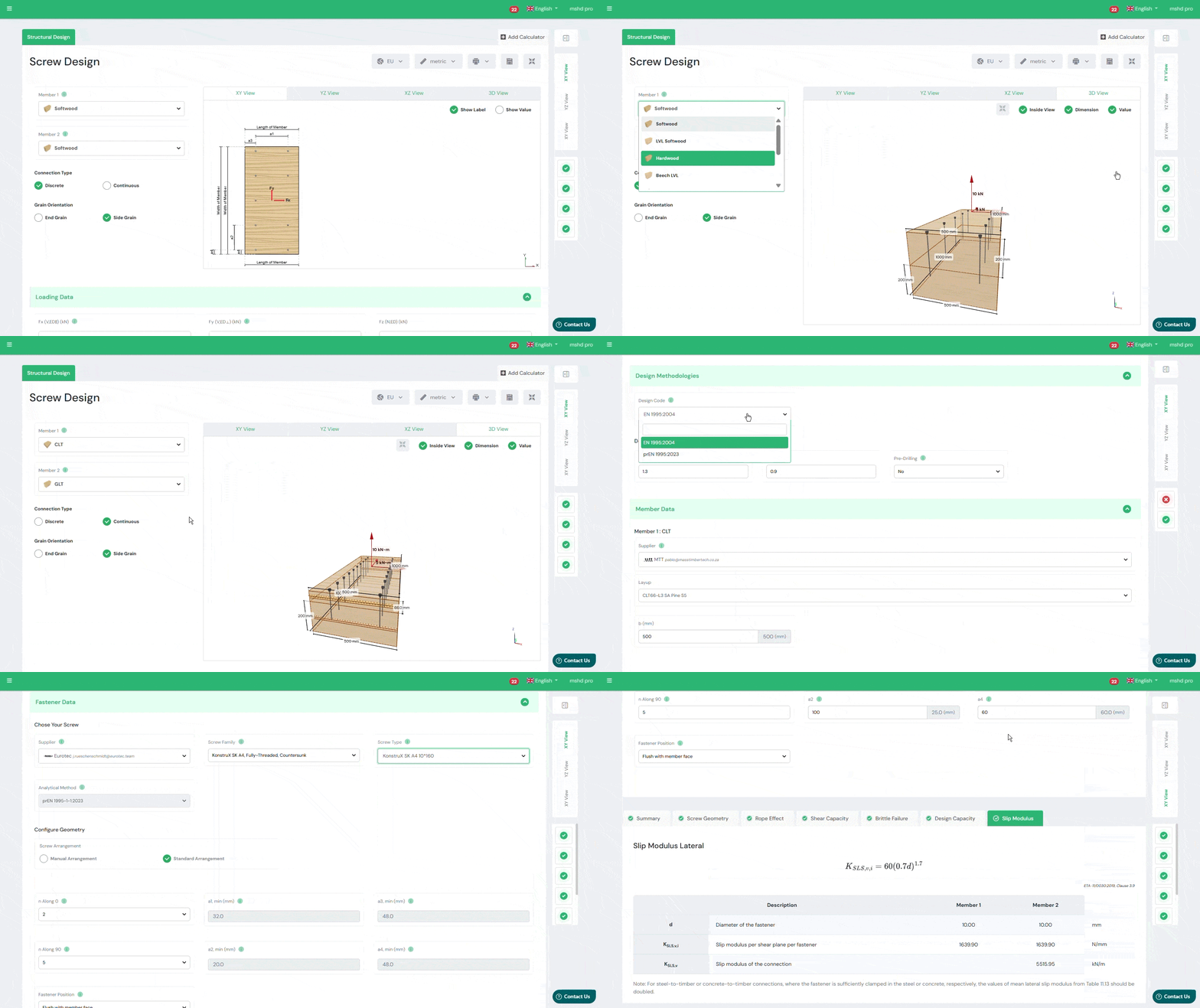
1. Moving Beyond Simplified Connection Design
While Eurocode 5 (EN 1995-1-1) is the current European standard for timber design, modern mass timber connections often require more advanced modelling and manufacturer-specific data to achieve optimal performance.
Advanced Yield Modeling: SPEC Toolbox utilizes the Eurocode Johansen Yield Models to provide accurate and reliable design outcomes for dowel-type fasteners in timber connections.
ETA Integration: We integrate supplier-specific European Technical Assessments (ETAs), ensuring your designs utilize ultimate performance data unique to specific product families.
2. Simplified Screw & Joint Design
Our platform transforms complex connection math into a streamlined, high-speed workflow:
Preconfigured Joint Types: Rapidly design and verify Half Laps, Splines, and Butt Joints with automated geometry checks.
Steel-to-CLT: Specialized modules for timber-to-steel connections, handling the complex stress distributions at the interface.
3. The “Global-Local” Connection Library
SPEC Toolbox is the only platform that allows you to pair your choice of CLT Supplier with the world’s leading Connection Manufacturers:
Universal Fastener Selection: Choose from top-tier brands including ESSVE, Eurotec, Klimas, Rocket/Vynex, Rothoblaas, Schmid Schrauben, Sihga, SPAX, Würth, or Pitzl.
Verified Compatibility: Seamlessly verify these fasteners against European CLT panels such as KLH, Kalvasta Timber, Binderholz, Södrа, MTT, Theurl, or Xlam Dolomiti.
Design of CLT Shear Walls
In-plane CLT Design
ProHolz vol 1 Clause 5.8
ProHolz identifies three failure mechanisms for CLT shear walls:
- Mechanism 1: Shearing of failure of the boards along a joint
- Mechanism 2: Shearing failure of the glued surface at the intersection of joints.
- Mechanism 3: Shearing failure of the entire plate.
FP innovation Clause 3.8
By considering the shear stresses in the lamellas and the crossing areas, three different failure modes exist in CLT beams subjected to shear stresses such as
- Failure Mode I: Shear failure parallel to the grain in the gross cross-section
- Failure Mode II: Shear failure perpendicular to the grain in the net cross-section
- Failure Mode III: Shear failure in crossing area of orthogonal lamination
Wall Connection Models
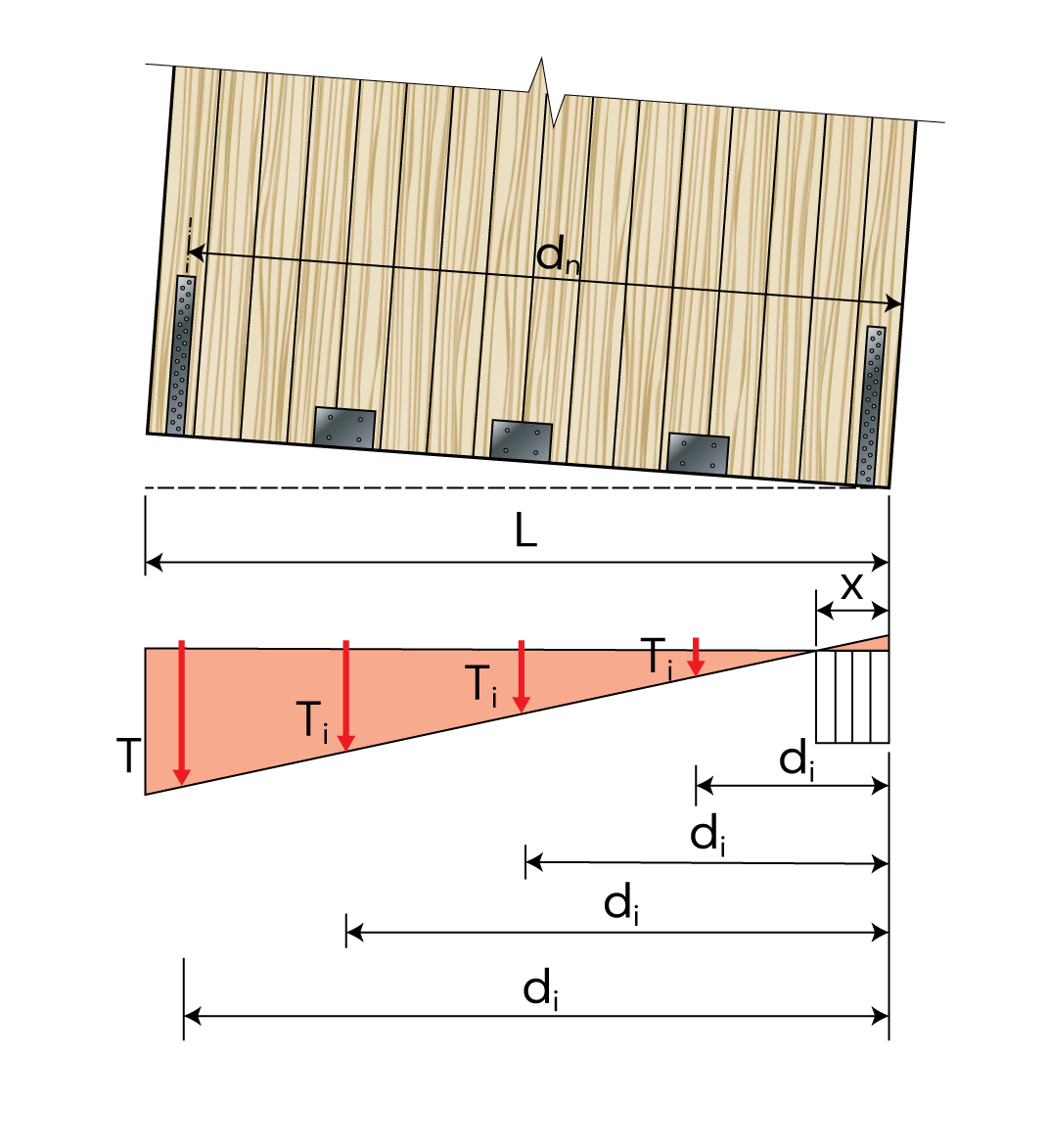
In summary of the methods that are used to determine the capacity of the CLT shear wall at the connection points include:
| Métodos | Resumen | |
| Method I, Casagrande et al. 2016 | Analiza muros de corte utilizando la rotación de cuerpos rígidos y el equilibrio estático, con el punto de rotación en el borde del panel, centrándose en el equilibrio de fuerzas internas. |
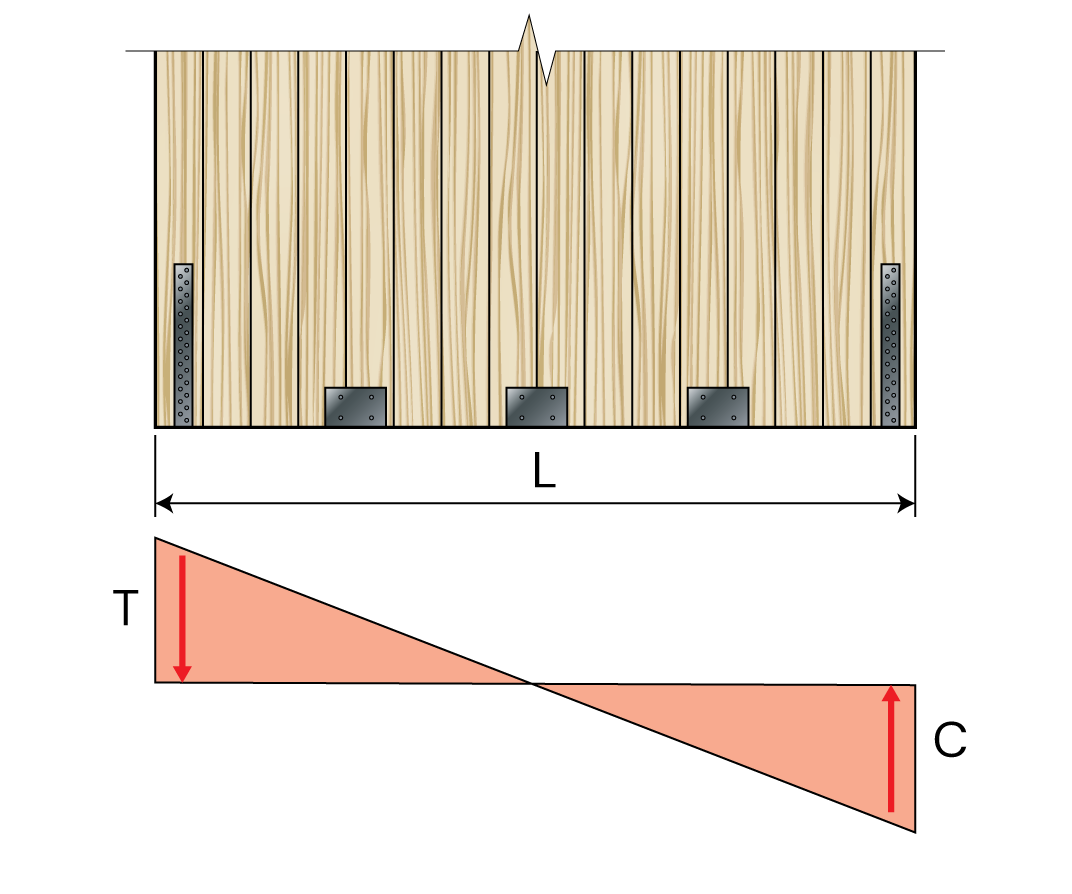 |
| Method II, Wallner-Novak et al. 2014 | Utiliza un bloque de tensión rectangular simplificado y tiene en cuenta la resistencia por fricción, lo que proporciona un enfoque más detallado de la resistencia al deslizamiento.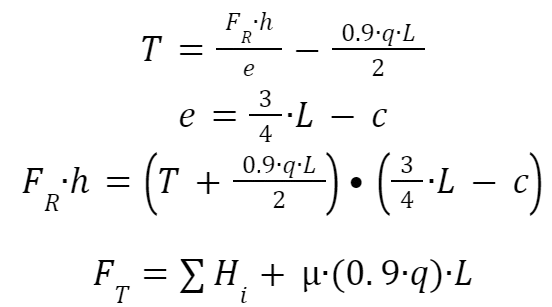
|
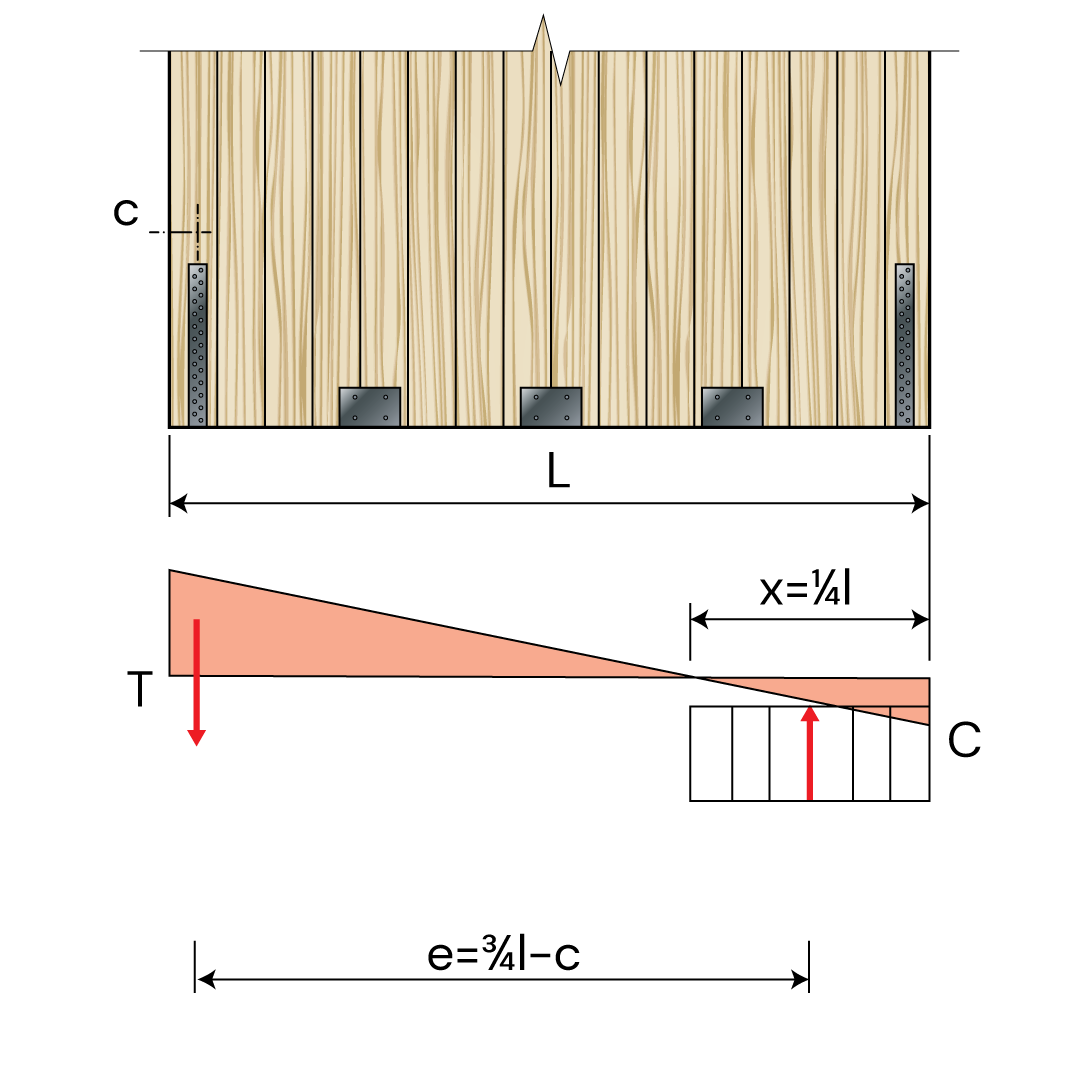 |
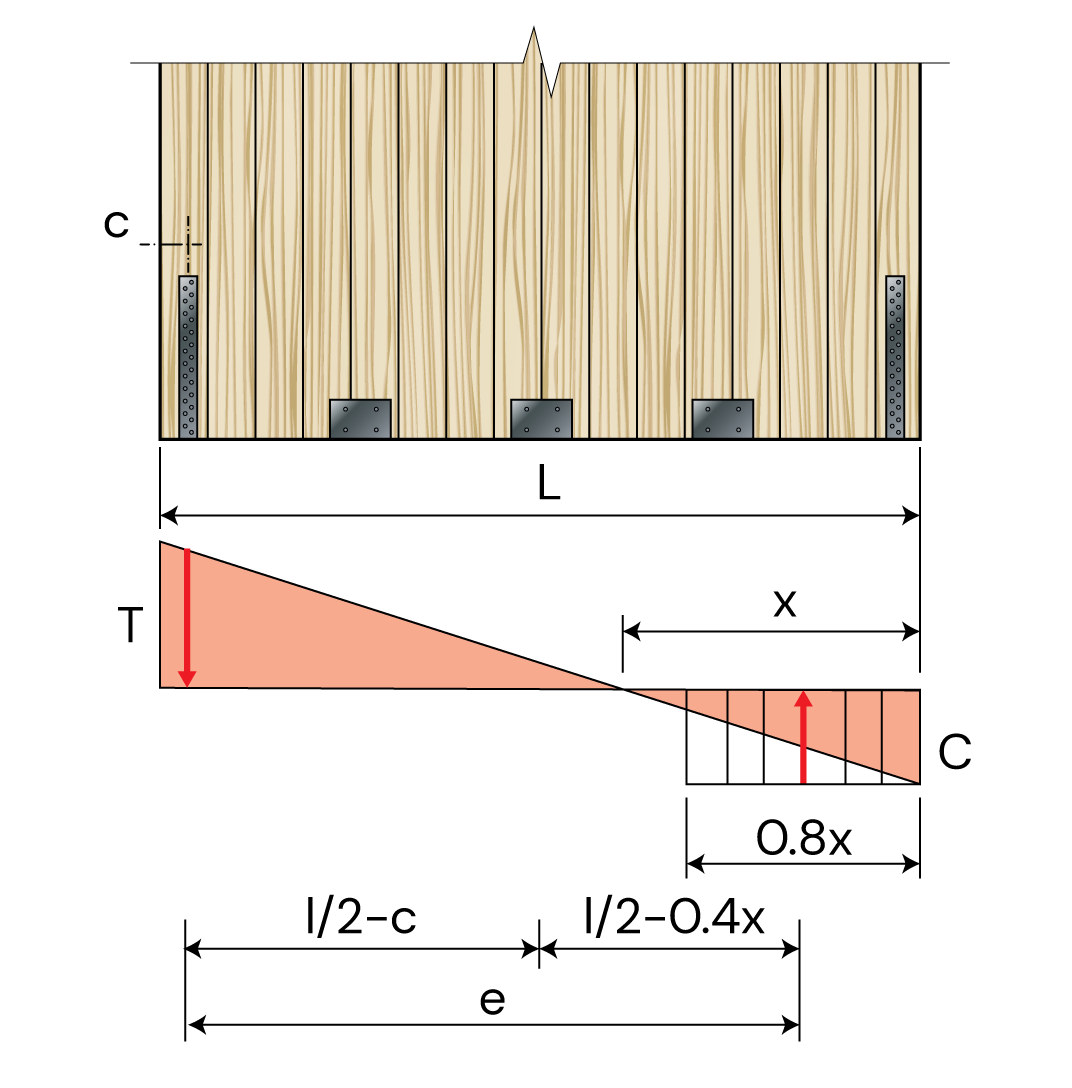
| Method III, Tomasi, 2014 | Similar a Wallner-Novak, pero con una longitud de zona de compresión diferente y asumiendo una cimentación extremadamente rígida con un cálculo refinado del eje neutro.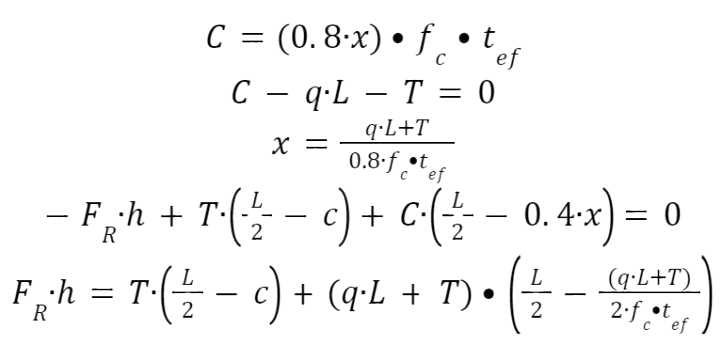
|
 |
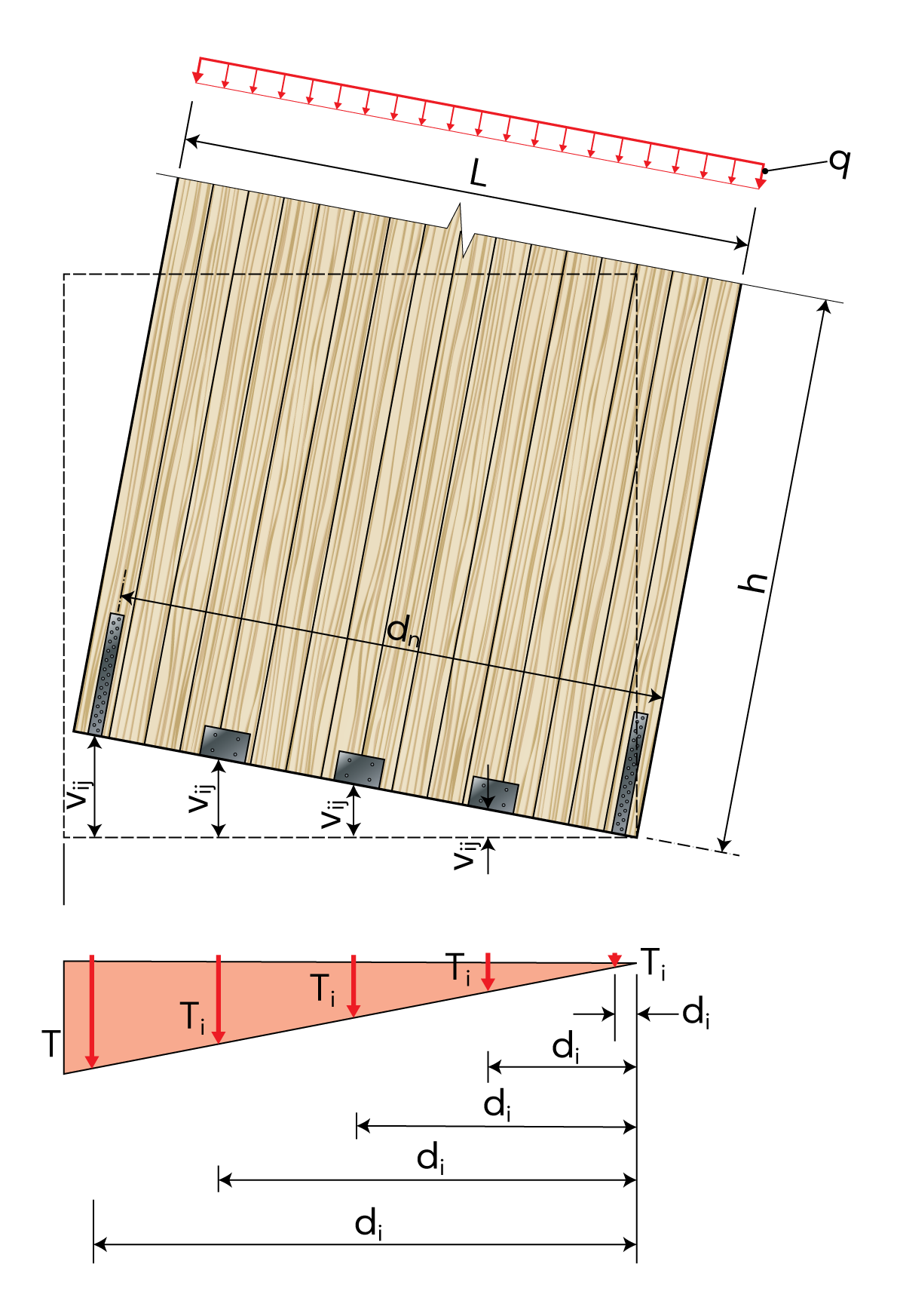
| Method IV, Pei et al. 2012 | Trata el panel CLT como un cuerpo rígido que gira alrededor de una esquina con conectores modelados como resortes elásticos, basándose en la resistencia de conexión calibrada hacia atrás y excluyendo la resistencia al deslizamiento del análisis.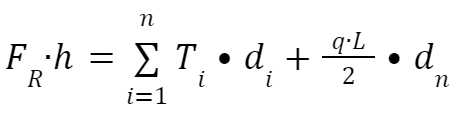
|
 |
| Method V, Reynolds et al. 2017 | Mejora el método de distribución triangular de la tensión al incluir una zona de compresión y tener en cuenta la fricción para mejorar la evaluación de la resistencia al deslizamiento.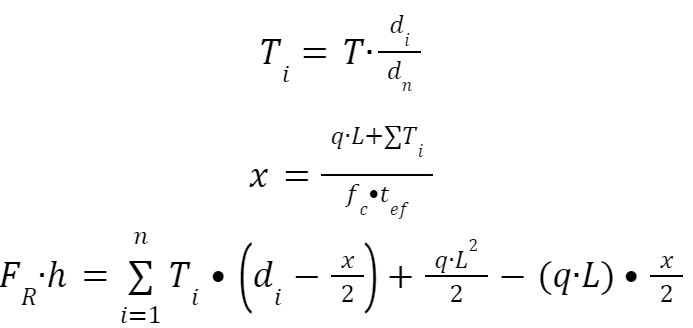
|
 |
The Ultimate CLT Design Platform for Australian Structural Engineers
If you’re looking to design CLT on your next project, then SPEC Toolbox has you covered!
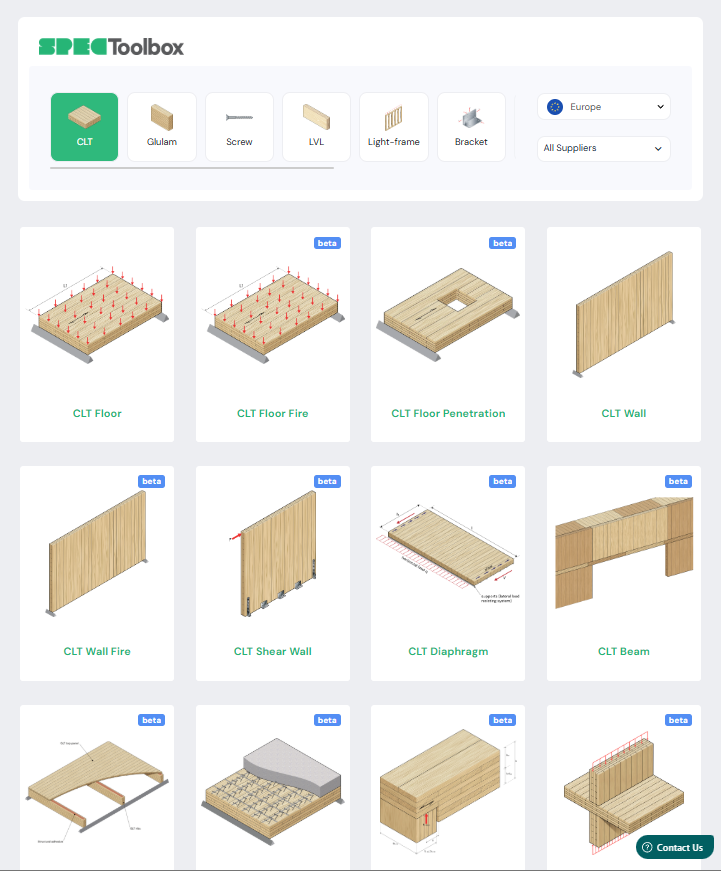
Tutorials
CLT Floor-to-Wall Connection Design

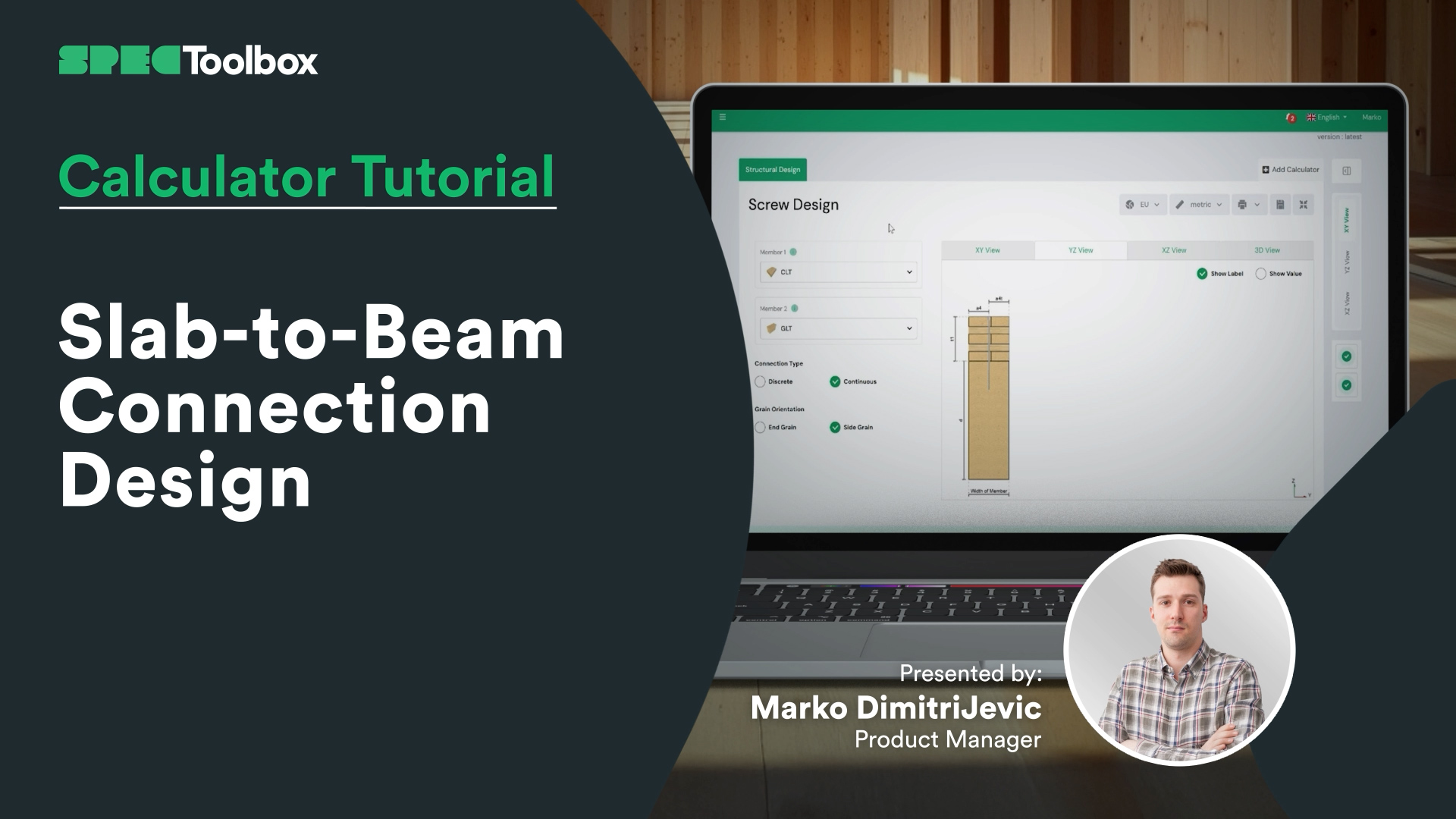
Slab-to-Beam Connection Design
Half-Lap Connection Design
Join us as we break down the Half-Lap joint design, focusing on maintaining structural continuity without external steel plates. Using the Screw Module, we walk through the auto-checking of edge distances and spacing requirements critical for these tight geometric joints.

Calculadora de conexión de media vuelta
Aprenda a utilizar la calculadora de solapas medias de CLT Toolbox para modelar una conexión de diafragma entre pisos. Comenzamos seleccionando la disposición de CLT, el proveedor y el ancho de solapa, y luego repasamos la diferencia entre los modos de cálculo discreto y continuo. Explore las opciones de proveedores de tornillos, familias de tornillos y optimización basada en ETA.

Calculadora de paredes CLT
En este vídeo, aprenderás paso a paso cómo diseñar un elemento de pared CLT típico. Trataremos la selección de un proveedor de CLT, el uso de las funciones adecuadas, imágenes dinámicas y contenido educativo para determinar el grosor y el diseño óptimos del panel. También verás cómo cambiar entre los tipos de estructura Platform y Balloon, aplicar diferentes métodos de excentricidad y añadir cargas en el plano y fuera del plano, lo que te proporcionará una sólida comprensión de los fundamentos del cálculo y el diseño de paredes CLT.
La madera maciza está dando forma al futuro de la construcción sostenible. Con la aparición de edificios de madera que baten récords en todo el mundo, dominar el diseño de CLT es más relevante que nunca. Echa un vistazo a nuestra aplicación CLT Toolbox para acceder a potentes herramientas de diseño, cálculos automatizados y conocimientos de expertos que te ayudarán a optimizar tus proyectos de CLT.

Calculadora de diseño de diafragmas CLT
Una guía completa para configurar y analizar el comportamiento del diafragma en la dirección X utilizando CLT Toolbox. Definirá los tipos de tornillos para los cálculos de rigidez, establecerá la geometría del panel, los tipos de conexión y los anchos de los paneles. Cubrimos cómo introducir las fuerzas ULS y SLS, y explicamos los valores de corte en el plano y los datos de laminación necesarios. El vídeo termina con un desglose de los resultados de deflexión, las acciones de fuerza y las comprobaciones de resistencia según el Eurocódigo 5.

Diseño contra incendios para suelos CLT
Nos complace presentar el tan esperado módulo Fire Design para suelos CLT, ahora disponible junto con la calculadora de diseño ambiental en CLT Toolbox.
Este tutorial explica cómo funciona el nuevo módulo, incluyendo qué estándares son compatibles y cómo se calcula la profundidad de caracteres capa por capa.
Key features include:
- Support for multiple fire models:
– Draft Eurocode 5 (prEN 1995-1-2:2023)
– Austrian National Annex (ÖNORM B EN 1995-1-2:2011)
– Standard Fire Tests (ISO 834 / EN 1363-1) - Flexibility to define protection layers and fire-exposed sides
- Automatic layer-by-layer charring depth calculations over time
- Clear logic for bond-line failure and glue-line degradation
- Full PDF export with all intermediate steps, safety factors and inputs
Diseñado para proporcionar a los ingenieros transparencia, precisión y rapidez en el diseño contra incendios de CLT.

Diseño de muros de corte CLT
Nos complace anunciar que la segunda versión de nuestra calculadora de muros de corte CLT ya está disponible.
Tras 12 meses escuchando los comentarios de los usuarios, nos complace presentar una herramienta mejorada y más robusta para el diseño de muros de corte.
Los muros de corte CLT tienen una excelente resistencia en el plano y pueden servir como un sistema fiable de resistencia a las cargas laterales.
La segunda versión de la calculadora incluye características tales como cinco métodos de transferencia de carga de vanguardia, aprovechando las investigaciones de Casagrande, Wallner-Novak, Tomasi, Pei y Reynolds. También hemos añadido comprobaciones de deformación lateral y cálculos de rigidez de paneles siguiendo la guía ProHolz 2014. Por último, también incluimos el diseño en plano de CLT según Proholz 2014 y FP Innovations 2019.
Durante el mes de octubre, la calculadora de muros de corte estará disponible en la versión gratuita. Así que entra en la aplicación y échale un vistazo 🙂.

Calculadora de diseño de suelos CLT
Acompáñenos mientras exploramos todo lo necesario, desde la elección del panel CLT ideal —ya sea que opte por el producto de un proveedor o introduzca manualmente sus propios datos— hasta la selección del anexo nacional adecuado, la definición de las cargas y el perfeccionamiento de los detalles más precisos. Este vídeo le guiará a través de cada etapa, incluyendo el análisis estructural, los cálculos de rigidez e incluso la integración de láminas encoladas en los bordes en su diseño.
También examinaremos cómo afectan a su estructura diversas técnicas de vibración y le revelaremos cómo puede optimizar su diseño teniendo en cuenta la rigidez en el plano de la solera de hormigón y la influencia del soporte flexible. Además, podrá realizar un seguimiento de los resultados y las fórmulas a lo largo de todo el proceso, lo que le garantizará estar siempre al tanto de todo.
¡Empecemos!

Calculadora de diseño de diafragmas CLT
Comience con un enfoque integral para el diseño de diafragmas definiendo las fuerzas, las propiedades de los materiales y aplicando los parámetros del Eurocódigo 5. Empiece por definir las fuerzas de entrada que actúan sobre el diafragma en la dirección X y seleccione los tipos de tornillos para los cálculos de rigidez. Establezca la geometría y la orientación del diafragma en las entradas del usuario, el tipo de conexiones de los paneles y el ancho de los paneles con la información técnica de los proveedores de CLT. Introduzca las fuerzas tanto para ULS como para SLS, teniendo en cuenta la dirección de la fuerza. Comprenda los valores de corte en el plano, los datos de laminación necesarios y los parámetros de diseño clave para el Eurocódigo 5. Por último, analice los resultados de la deflexión, la teoría subyacente, las fuerzas de acción y las comprobaciones de resistencia para garantizar un diseño preciso y eficiente.

Frequently Asked Questions
Does this calculator handle Fire Design?
For this specific module, we focus on “Cold” (Ambient) design. However, CLT generally performs well in fire due to the “Charring Rate” (β0 approx 0.65 mm/min). We recommend checking our standalone CLT Floor Fire Calculator for fire limit states.
Can I define custom layups?
Yes. You can select standard layups (e.g., 100mm 3-ply, 140mm 5-ply) or define a custom buildup layer-by-layer to match a specific manufacturer (e.g., Sodra, KLH, Binderholz).
What about Point Loads?
The current version analyzes Uniformly Distributed Loads (UDL) typical for floor joist design. For concentrated point loads, local punching shear checks may be required separately.






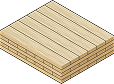 CLT
CLT Dowels
 Tornillos
 GLT
GLT Soportes
 Light-frame
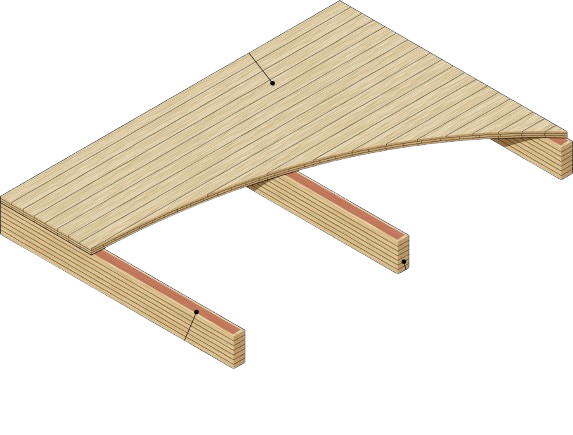 Cubierta acanalada
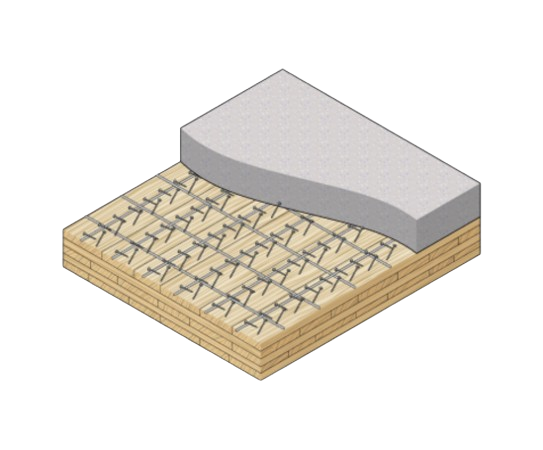 TCC
TCC