
Timber Bracket Design for AS1720
Verify proprietary angle brackets, hold-downs, and shear plates to AS 1720.1. Access a unified library of global suppliers like Rothoblaas, Pitzl, Eurotec, Simpson Strong-Tie and Sihga, fully calibrated for Australian design.
Bridging the Gap (ETA to AS 1720)
The Australian mass timber market relies heavily on high-performance connectors imported from Europe. However, translating European Technical Assessment (ETA) characteristic values into AS 1720.1 design capacities is often a manual, confusing process for local engineers.
The SPEC Toolbox Brackets Module solves this “translation gap.” It acts as a compliance engine, automatically converting standard European data (Rk) into Australian Limit States Design capacities (Φ Nj). Whether you are specifying a Rothoblaas WHT hold-down or a Pitzl connector, this tool ensures your specification is safe, compliant, and optimized for local conditions.
The Australian Engineering Platform for Bracket Design
This tool unifies the supply chain, allowing you to select and verify products from leading global manufacturers in a single interface. It includes:

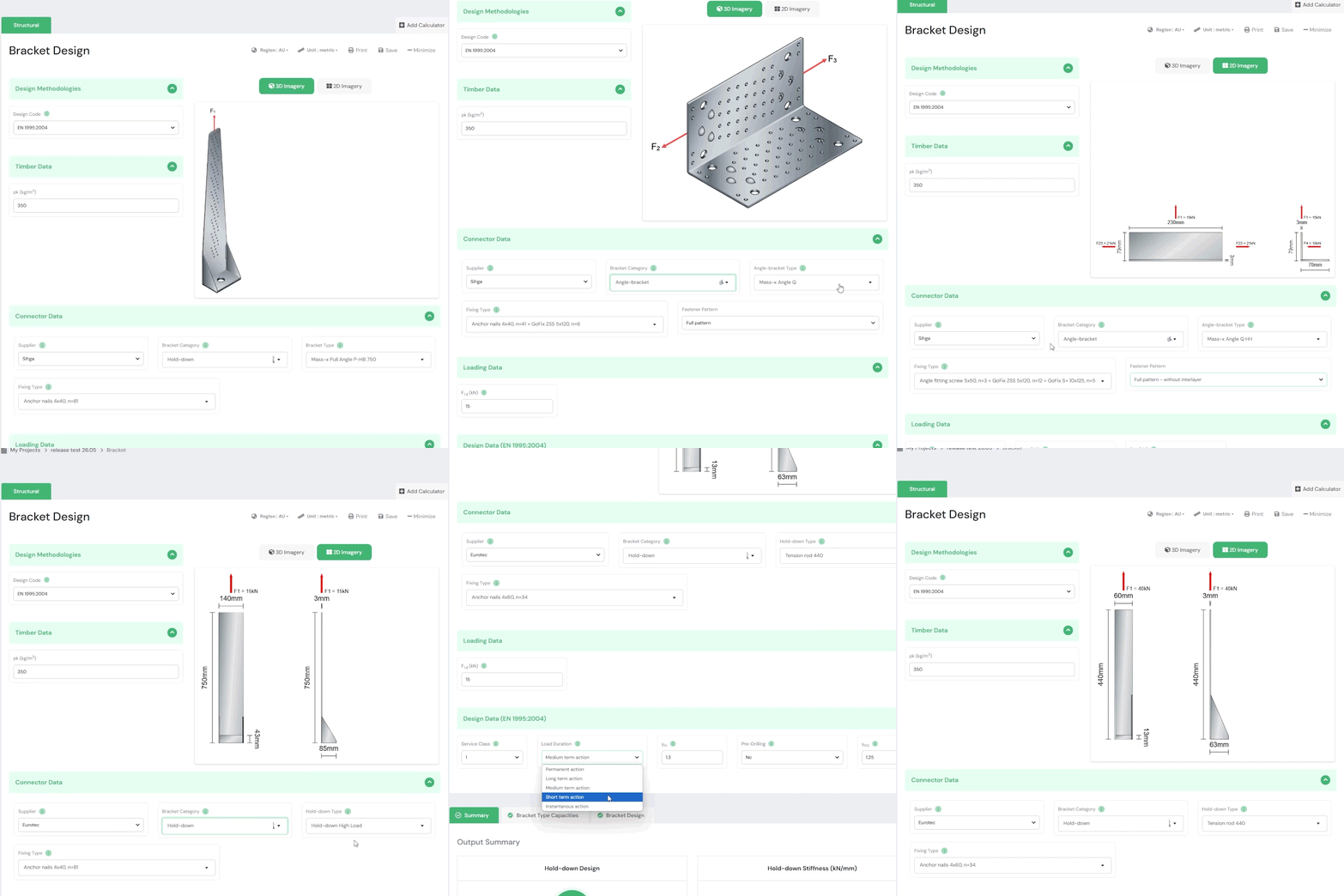
Timber Brackets
Technical Guide: Using Proprietary Brackets in Australia
1. The “Code Conversion” Engine
Most proprietary brackets perform according to an ETA. AS 1720.1 requires specific adjustments to these values.
Our module automatically handles the conversion:
Characteristic Strength (Rk): Pulled directly from the ETA.
Capacity Factor (Φ): Applied per AS 1720.1 (typically Φ = 0.70 or 0.80 depending on the failure mode and product type).
Duration of Load (k1): Adjusts for Wind vs. Dead Load cases.
2. Angle Brackets & Hold-Downs
We support the full range of connection geometries:
- Hold-Downs (Uplift): Critical for shear walls in CLT and light-frame bracing (e.g., Rothoblaas WHT, Titan).
- Shear Brackets: For transferring lateral loads at floor-to-wall junctions (e.g., Titan Plate, WKR).
- Concealed Connectors: For architectural mass timber nodes (e.g., Pitzl GePi, Alu-Start).
3. Integrated Education
Designers can visualize the “true behavior” of the connection. The module includes dynamic tooltips and educational content to help you distinguish between a bracket designed for shear and one designed for uplift, preventing costly site errors.
Integrated Suppliers & Products
The platform features verified digital twins from the world’s leading connection specialists:
Rothoblaas
- Hold-Downs: WHT (ETA-23/0813), Titan (ETA-11/0496).
- Brackets: Nino, WKR, WKR Double (ETA-22/0089).
- Straps: WHT Plate, Titan Plate.
Pitzl
- Connectors: GePi Angle Brackets (ETA-21/0750) and specialized dovetail systems.
Eurotec & Sihga
- Extensive libraries of base plates, angle brackets, and innovative timber connectors.
Key Formulas & Parameters
Design Capacity (Nd):
Nd = Φ • k1 •t kmod,ETA • Rk
- Φ Factor: The tool applies the relevant factor (e.g., 0.7 for mechanical joints) ensuring the design meets the target reliability index of the NCC.
- k1 Factor: Essential for wind design. A bracket that works for wind (k1=1.14) might fail under dead load (k1=0.57). The tool checks all load cases.
Fastener Group Checks:
For brackets using multiple nails/screws (e.g., 20x Anker Nails), the tool calculates the group capacity, ensuring the timber substrate doesn’t split before the bracket yields.
Tutorials
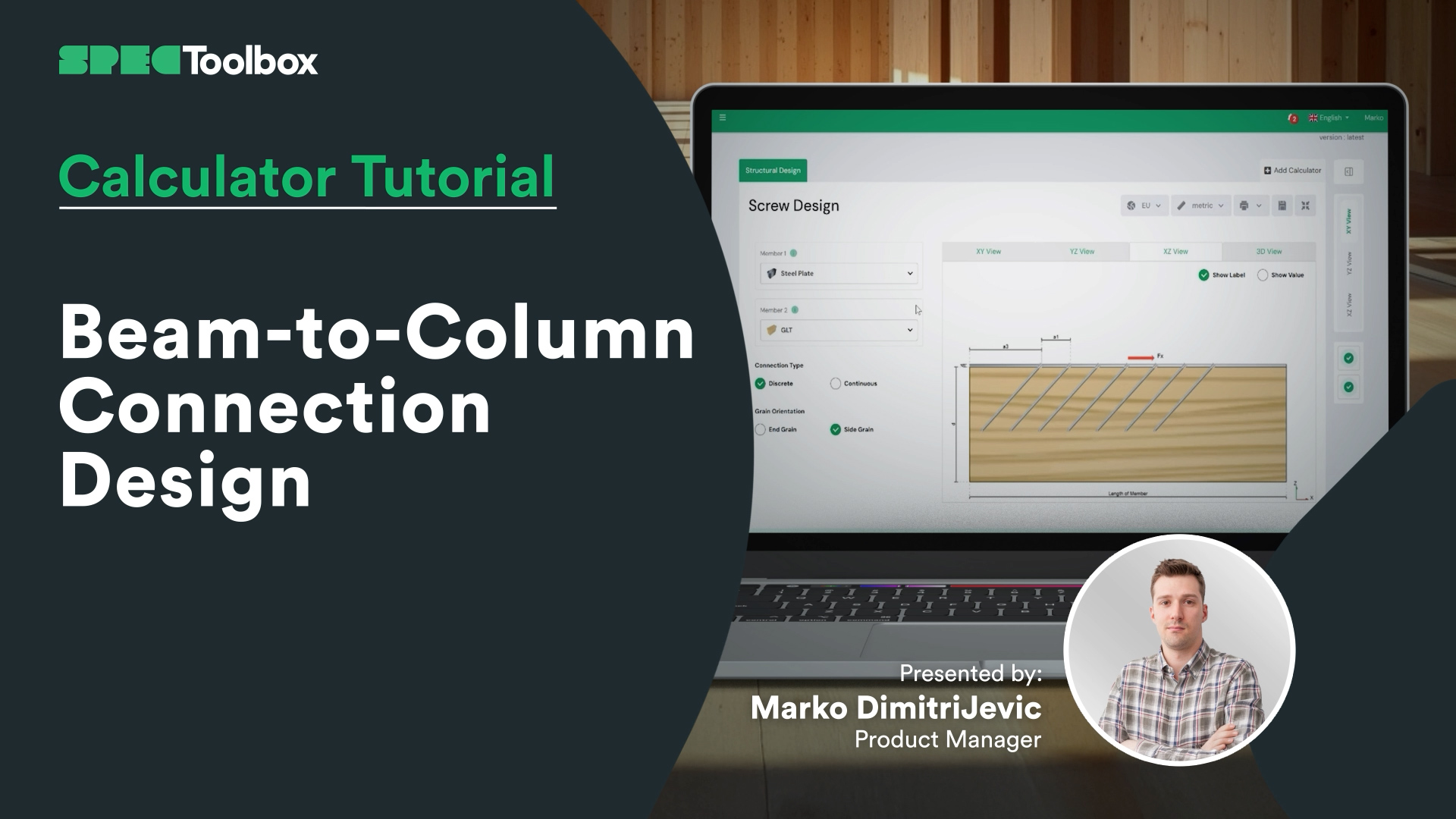
Beam-to-Column Connection Design
Beam-to-Column Connection Tackle the complexity of Beam-to-Column joints in this focused tutorial. We demonstrate how to replace complex bespoke steelwork with smart screw arrangements. Using the Screw Module, we verify the capacity of inclined screw groups to handle significant shear loads directly at the support interface.
Key Screw Benefits:
Crossed-Screw Configurations: Shows how arranging screws in crossed pairs (X-formation) significantly boosts stiffness.
Ductility & Safety: detailed look at how modern structural screws provide necessary ductility for safe, predictable failure modes.
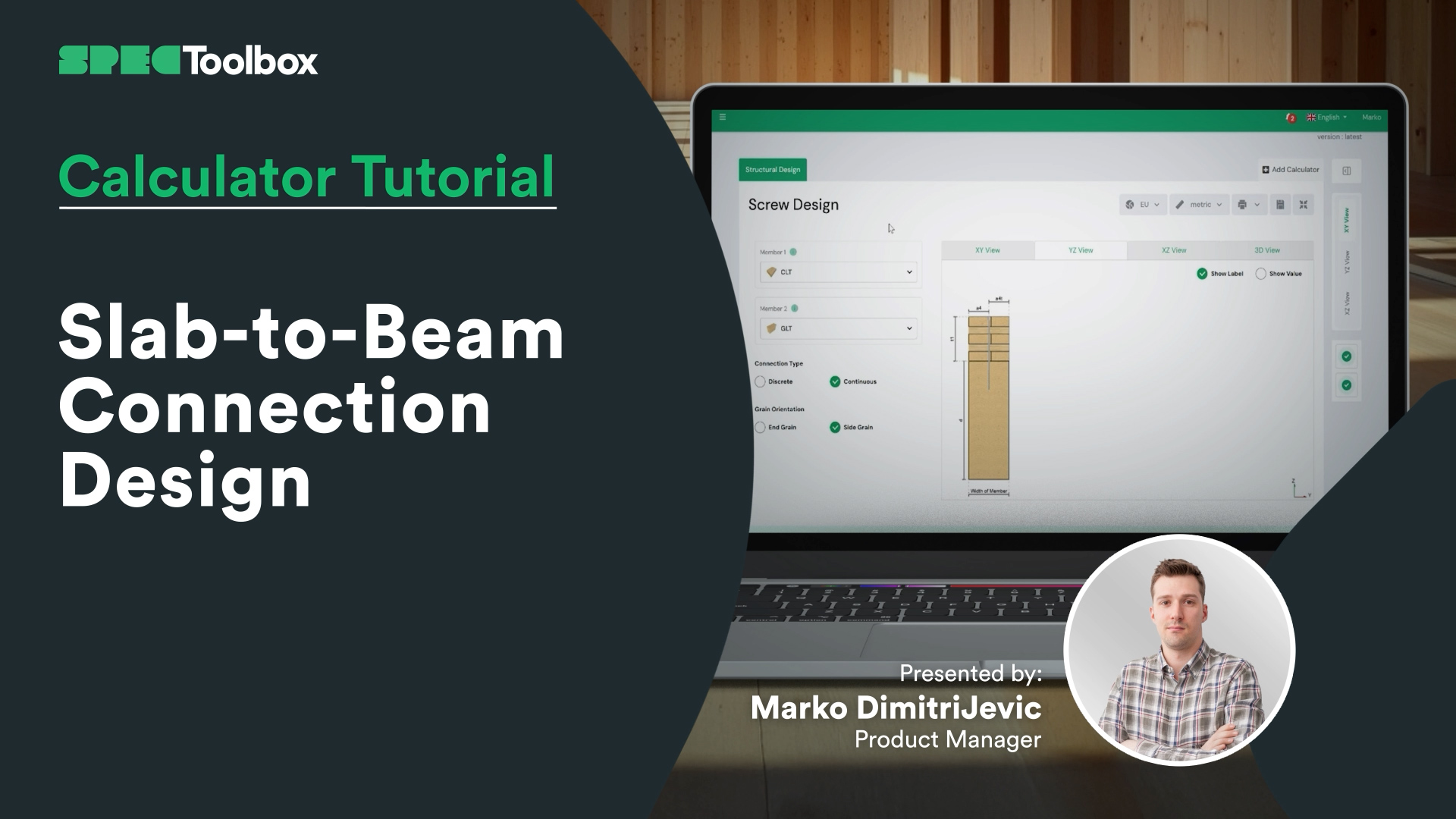
Slab-to-Beam Connection Design
Calculadora de columnas de madera
En este vídeo, le guiaremos a través del diseño de una columna de madera utilizando cargas de área tributaria, siguiendo las normas Eurocódigo 5 y AS1720. Comenzamos seleccionando el material adecuado que no solo cumpla con las exigencias estructurales, sino que también se ajuste a los requisitos de diseño. A continuación, detallamos cómo introducir las cargas de las columnas superiores y la viga soportada, asegurándonos de que se tenga en cuenta cada fuerza. Una parte esencial de este proceso es incorporar las cargas laterales del viento. También mostramos cómo optimizar la sección transversal para mejorar tanto la eficiencia como el rendimiento.
En CLT Toolbox, nos apasiona el #masstimber: es sostenible, innovador y está cambiando la forma en que construimos. Nos encanta cómo combina resistencia, durabilidad y beneficios medioambientales en un solo paquete inteligente. En nuestro vídeo, desglosamos el proceso con consejos sencillos y explicaciones claras para que puedas poner en práctica estos métodos en tus propios proyectos. Si estás listo para llevar tu trabajo de diseño hacia el futuro, quédate con nosotros y sumérgete en él junto a nosotros.
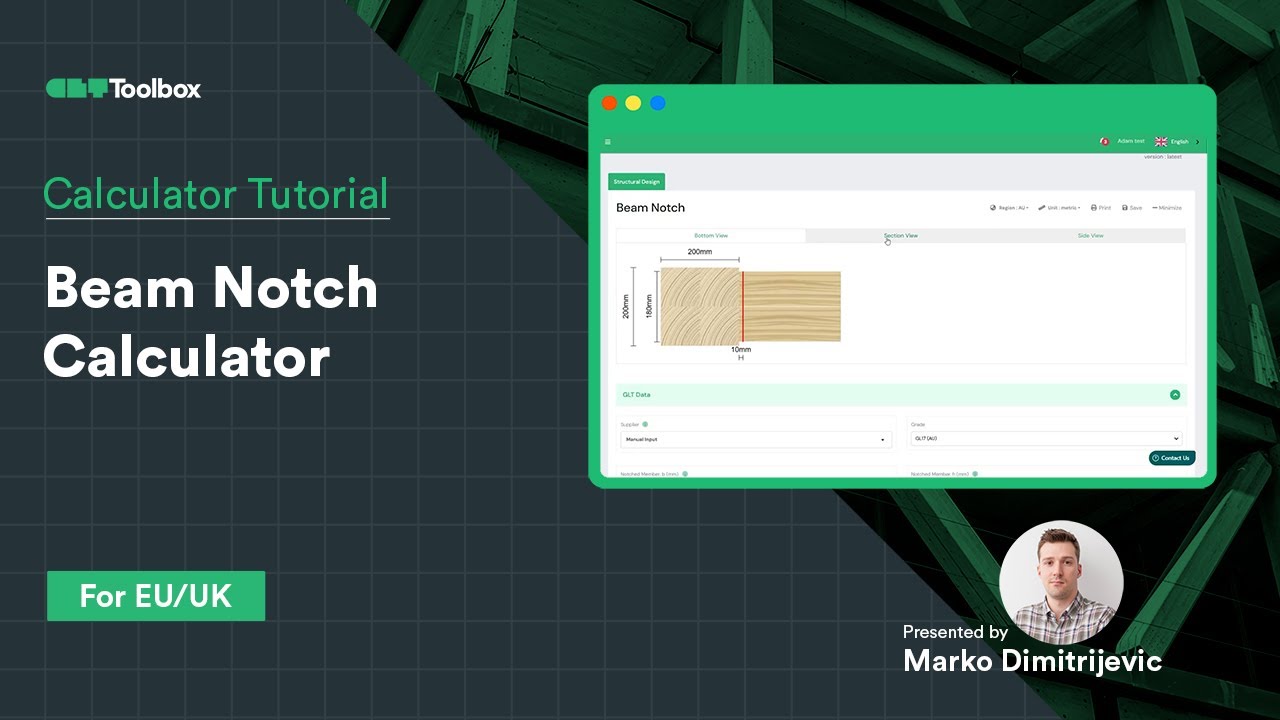
Calculadora de muescas en vigas
Diseño y verificación de una muesca en una viga GLT según EC5 con CLT Toolbox
La pregunta clave: ¿la sección transversal reducida proporciona suficiente capacidad o es necesario reforzarla con tornillos?
Esto es lo que hemos tratado en este vídeo:
– Cómo comprobar la capacidad de la muesca utilizando EC5
– Cuándo y cómo utilizar tornillos de refuerzo basándose en los datos ETA de los proveedores
– Introducción a las entradas de geometría de los tornillos
– Cómo la posición, la orientación y la cantidad de tornillos pueden optimizar el diseño
Una guía práctica para lograr conexiones de madera seguras y eficientes. ¡Nos encantaría conocer tu opinión o tus experiencias con diseños similares!
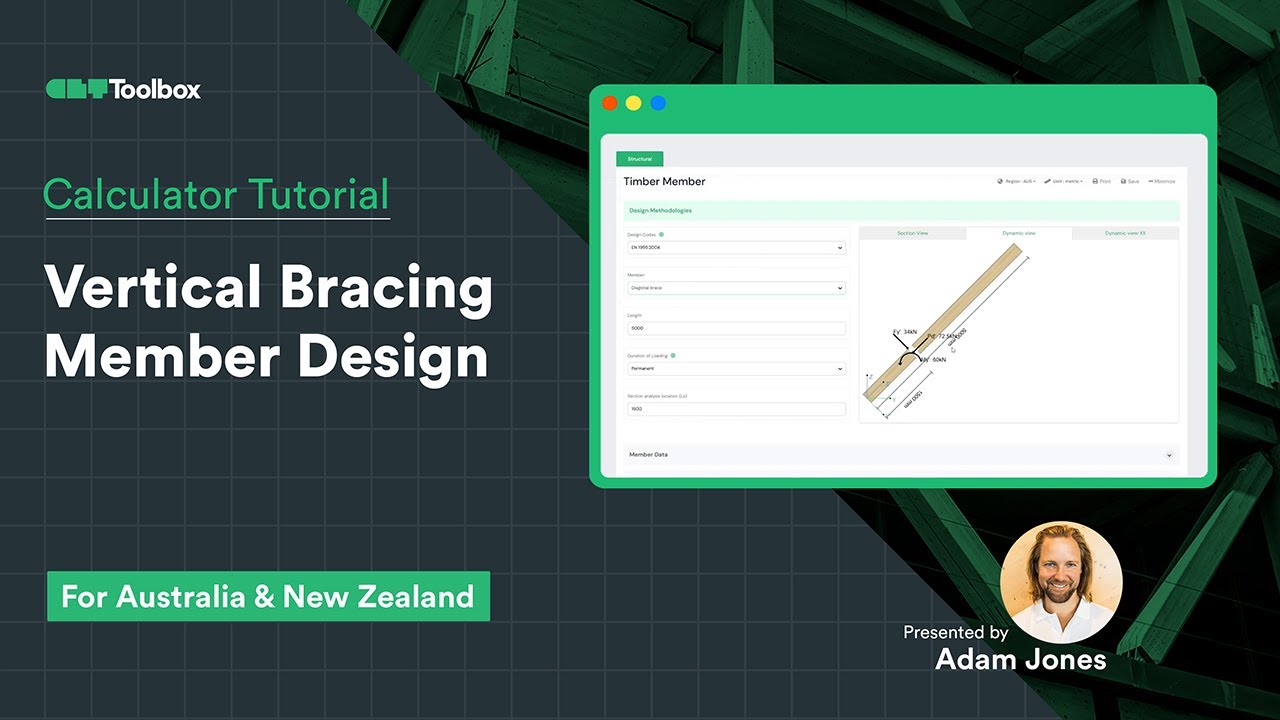
Diseño de elementos de refuerzo verticales
Aprenda a utilizar la calculadora de miembros de CLT Toolbox para diseñar un refuerzo diagonal vertical. Le guiaremos a través de la importación de resultados de análisis desde herramientas externas, la identificación de las fuerzas máximas de tensión y compresión, y la selección de los datos de entrada adecuados: calidades, secciones, especificaciones del código y fuerzas. Además, desglosaremos los resultados, cubriendo las propiedades de los materiales y todas las comprobaciones clave del diseño. ¡CLT Toolbox está aquí para ser su socio en el diseño de proyectos de madera!
Calculadora de columnas de madera
En este vídeo, le guiamos a través del diseño de columnas de madera utilizando cargas de área tributaria, todo ello de acuerdo con las directrices del Eurocódigo 5. Comenzamos seleccionando el material adecuado y el anexo nacional, asegurándonos de que su punto de partida sea sólido y cumpla con la normativa. A continuación, le mostramos cómo introducir las cargas adecuadas de las columnas superiores, así como de la viga soportada. También cubrimos el paso crucial de añadir cargas de viento laterales. A medida que avancemos, verá cómo optimizar la sección transversal de su columna tanto en resistencia como en eficiencia.
En CLT Toolbox, nos apasiona la madera maciza, ya que es sostenible, innovadora y está cambiando la forma en que construimos. Nos encanta cómo combina resistencia, durabilidad y beneficios medioambientales en un solo paquete inteligente. En nuestro vídeo, desglosamos el proceso con consejos sencillos y explicaciones claras para que puedas poner en práctica estos métodos en tus propios proyectos. Si estás listo para llevar tu trabajo de diseño hacia el futuro, quédate con nosotros y profundicemos juntos en el tema.
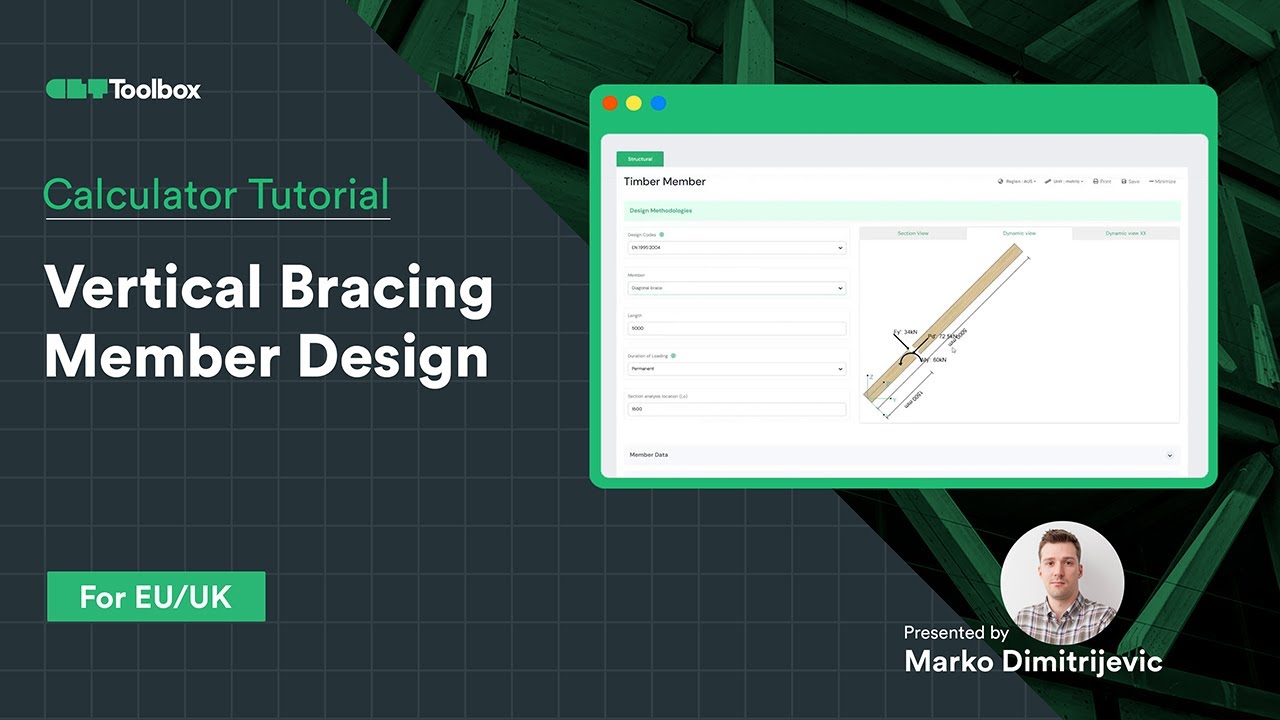
Diseño de elementos de refuerzo verticales
Aprenda a diseñar diagonales de refuerzo verticales con la calculadora de elementos de CLT Toolbox. Este vídeo le guía a través del proceso de importación de datos de fuerza desde herramientas de análisis externas, identificación de las fuerzas máximas de tensión y compresión, y selección de los datos de entrada correctos: grados, secciones, códigos de diseño y cargas aplicadas. Obtenga una visión general clara de los resultados, incluidas las propiedades de los materiales y las comprobaciones de diseño basadas en el Eurocódigo.
La madera maciza está transformando la construcción moderna con su huella sostenible y baja en carbono, ofreciendo una potente alternativa a los materiales de construcción tradicionales. CLT Toolbox está aquí para ayudarle en cada paso del camino en el diseño de su proyecto soñado con confianza y precisión.
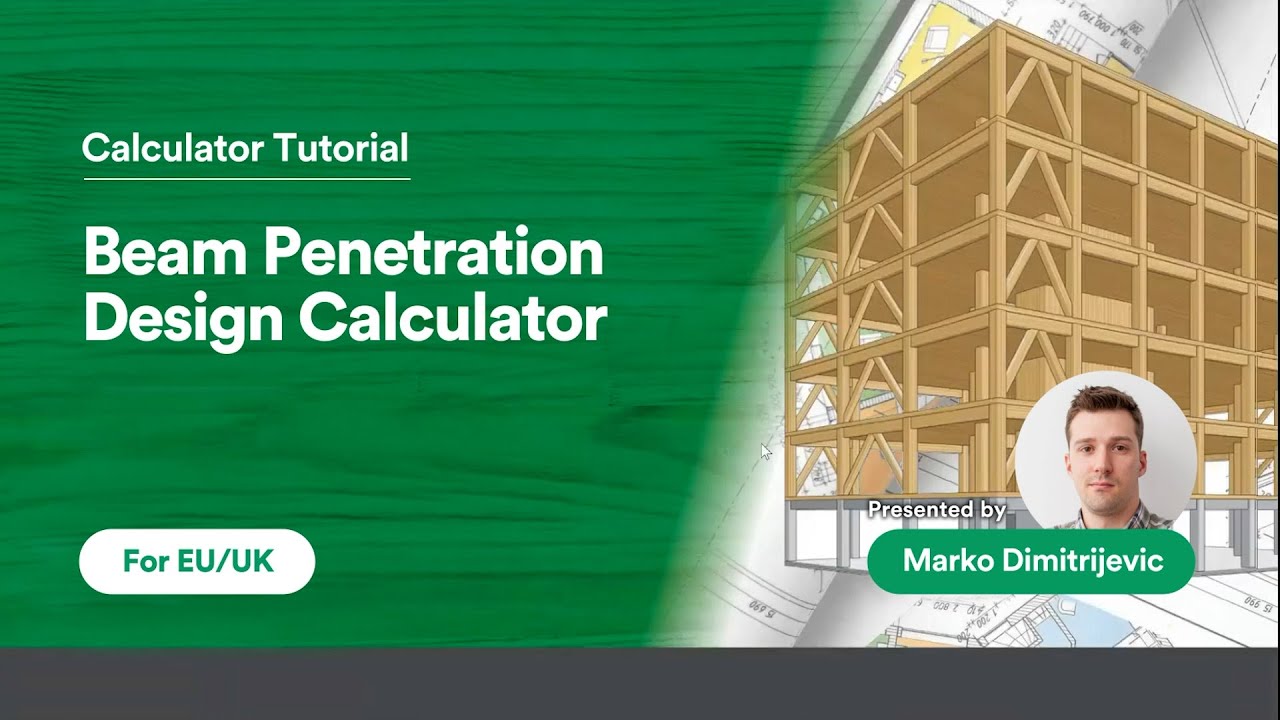
Diseño de penetración de vigas GLT
La calculadora de penetración de vigas GLT simplifica el proceso de diseño de vigas estructurales con penetraciones. Las características de esta calculadora son las siguientes:
Normas de diseño: Cumple con el Eurocódigo (prEN 1995:2023) o AS 1720:2010/NZ WDG Ch12.6.
Opciones de entrada de material: Elija entre la entrada manual o un proveedor asociado preferido.
Formas de penetración: Abarca penetraciones rectangulares y circulares hasta un máximo de cinco penetraciones.
Tipo de viga: Se centra exclusivamente en vigas simplemente apoyadas.
Combinaciones de carga: Ofrece fuerzas de diseño de entrada. Verificación de resistencia: Incluye comprobaciones integradas para limitaciones geométricas, capacidad de tensión, capacidad de flexión y capacidad de corte.
Comprobación de refuerzos: proporciona comprobaciones de diseño y geometría de refuerzos de tornillos.
Frequently Asked Questions
Is this compliant with the NCC?
Yes. By applying the correct AS 1720.1 safety factors to verified ETA test data, the output can be used as part of a Performance Solution or DtS design (depending on the certifier’s interpretation of proprietary products).
Does it check the Concrete Anchor?
The tool verifies the force transferred to the anchor. We provide the specific tension and shear reactions ($N^*, V^*$) required for you to run your concrete anchor check (e.g., to AS 5216).
Can I mix and match suppliers?
Yes. You can compare a Rothoblaas solution against a generic alternative to find the most cost-effective or available option for your project.






 CLT
CLT Dowels
 GLT
GLT Tornillos
 Soportes
 Light-frame