
Dowel & Bolt Design Software for CSA O86:2024
Design complex timber connections to CSA O86-19/24. Analyze Shear, Axial, and Moment actions on multi-bolt groups with automated Limit States Design (LSD) checks.
Engineering Platform for Timber Connections to CSA O86:2024
Canadian timber design is unique in its rigorous treatment of brittle failure modes. While a bolt might yield ductilely, the timber around it can split suddenly—a risk that CSA O86 addresses with complex “Row Shear” and “Group Tear-out” equations.
The SPEC Toolbox Dowel & Bolt Module handles this complexity automatically. Whether you are designing a glulam truss node or a heavy timber beam splice, this tool runs the full CSA O86 Limit States Design (LSD) verification. It optimizes your connection for both ductile yield (steel failure) and brittle fracture (wood failure), ensuring a safe and efficient design.
What This Calculator Does
This module utilizes a dynamic visual engine to optimize dowels, bolts, and steel plates. It automates the iterative checks required by the National Building Code of Canada:

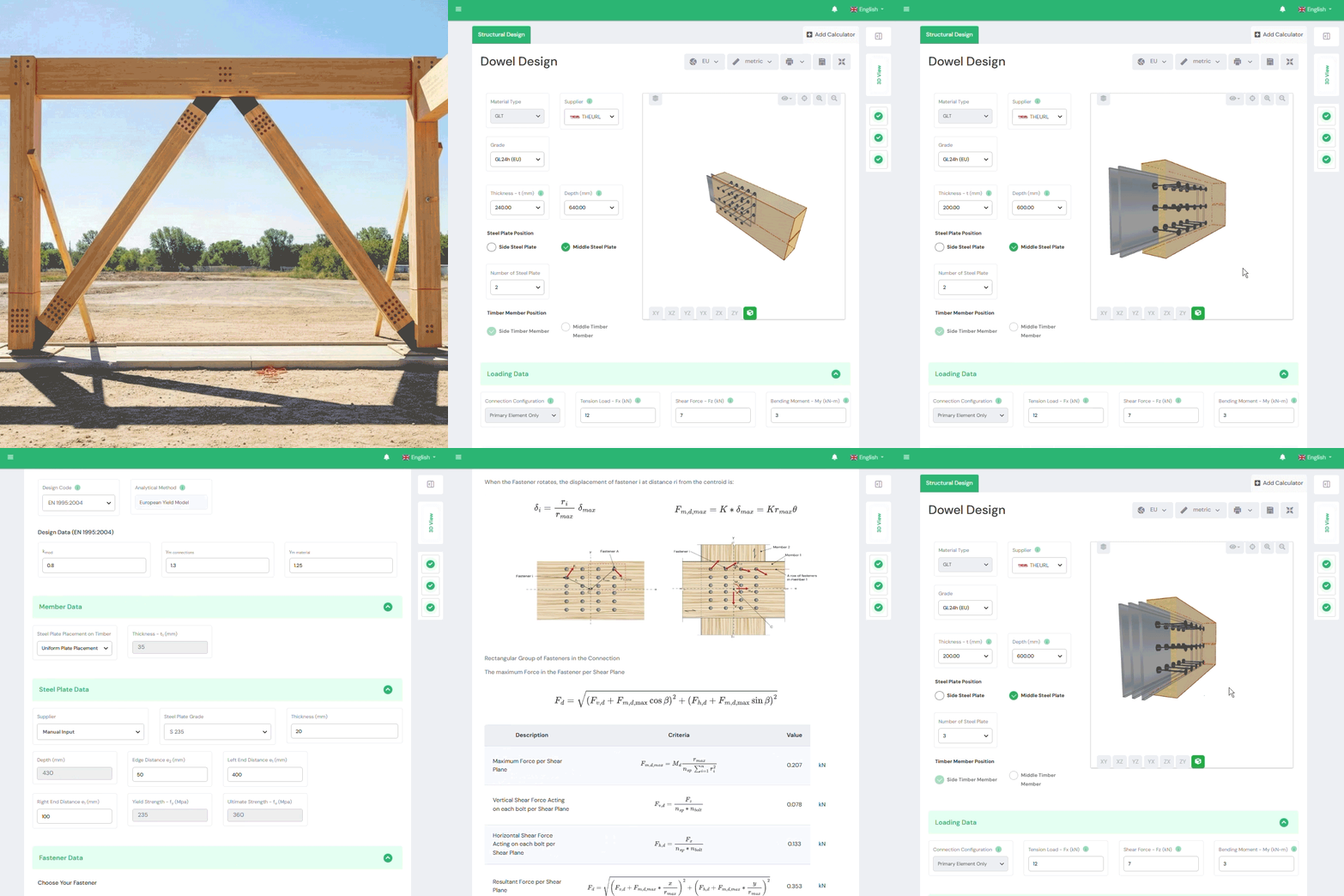
Key Dowel & Bolt Connection Design Capabilities
Overview of Dowel-Type Timber Connections
Dowel-type fasteners such as bolts and steel dowels are among the most widely used connection systems in structural timber engineering. These fasteners transfer forces between timber members through bearing stresses in the wood and bending of the fastener.
SPEC Toolbox provides an advanced calculator for the design and verification of dowel-type connections in timber elements with steel plates. The tool evaluates the interaction between timber members, steel plates, and fasteners, enabling engineers to verify connection capacity under combined loading conditions.
For the Canadian region, the calculator supports the following design standard:
• CSA O86:2024 – Engineering Design in Wood
This standard defines the design procedures for dowel-type fasteners using yield theory, spacing requirements, and timber failure checks.
The calculator supports bolts and steel dowels installed in glulam or solid timber members and allows flexible configuration of steel plate placement, fastener layouts, and loading conditions.
Applied Forces and Connection Configuration
Applied Forces and Connection Configuration
The structural behavior of a dowel-type connection is governed by the forces acting on the joint. The calculator allows engineers to define the primary load components transferred through the connection.
The following loads can be applied:
Axial Tension Force (Fx)
Force acting parallel to the connection axis that produces tension in the timber members and fastener group.
Shear Force (Fz)
Force acting perpendicular to the fastener axis and transferred through bearing between the timber and the fasteners.
Bending Moment (My)
Moment applied to the connection that introduces additional force redistribution within the fastener group.
Engineers can also define the connection configuration, specifying whether the connection acts as a primary structural element or part of a larger load transfer system.
Yield Model Analysis for Dowel-Type Fasteners
Yield Model Analysis for Dowel-Type Fasteners
The calculator evaluates dowel-type connections using the European Yield Model (EYM), which is adopted in the CSA O86 timber design standard for dowel-type fastener design.
This analytical approach considers the interaction between:
-
timber embedment strength
-
fastener bending resistance
-
steel plate stiffness
-
load redistribution within the fastener group
Multiple potential failure mechanisms are evaluated automatically, including:
-
timber embedment failure
-
fastener yielding
-
combined timber–fastener plastic mechanisms
By evaluating all possible yield modes, the calculator determines the governing connection resistance and ensures reliable structural verification.
Timber Member Configuration
The timber member forms the primary structural component of the connection. Its geometry and material properties significantly influence connection capacity.
The calculator allows engineers to define:
-
Material type (e.g., GLT or other timber products)
-
Species
-
Grade
-
Member thickness (t)
-
Member depth
Engineers can also define the steel plate position relative to the timber members, including:
-
side steel plate configuration
-
middle steel plate configuration
-
number of steel plates
These parameters determine the load transfer mechanism and influence fastener spacing requirements, splitting resistance, and overall joint behavior.
Steel Plate Properties
Steel plates are frequently used in timber connections to improve load distribution and increase joint capacity.
The calculator allows engineers to define the mechanical and geometric properties of the steel plate, including:
-
steel plate grade (e.g., ASTM A36 – Carbon Steel)
-
plate thickness
-
plate depth
-
edge distances
-
end distances
Material properties such as yield strength (fy) and ultimate strength (fu) are used to evaluate the structural resistance of the steel plate.
These parameters ensure that the steel component of the connection is adequately defined for structural analysis.
Fastener Type and Mechanical Properties
Fasteners are the primary load-transferring elements within dowel-type timber connections.
The calculator supports the design of:
• Bolts
• Steel dowels
Engineers can define fastener characteristics including:
-
fastener type
-
dowel or bolt grade (e.g., ASTM A307 Grade A)
-
bolt diameter
-
number of rows of fasteners
-
number of fasteners per row
-
fastener distribution pattern
-
installation or cutting angle
These parameters directly influence the fastener capacity, load distribution, and governing connection failure mode.
Spacing and Edge Distance Requirements
Proper fastener spacing and edge distances are essential to prevent brittle timber failure modes such as splitting or group tear-out.
The calculator allows engineers to define:
-
spacing along the grain a1
-
spacing across the grain a2
-
loaded end distance at
-
unloaded edge distances ac
Engineers may either define these values manually using User-Defined Edge Distance or apply minimum edge distance criteria.
These geometric constraints ensure proper stress distribution and sufficient timber strength around the fasteners.
Automated Connection Capacity Checks
After defining the geometry, materials, and loads, the calculator performs a complete structural verification of the connection.
The following checks are automatically evaluated:
Geometric Verification
Ensures that spacing, edge distances, and layout requirements satisfy CSA design code provisions.
Timber Member and Fastener Checks
The connection is evaluated for several potential timber and fastener failure modes, including:
-
yielding resistance of fasteners
-
row shear resistance
-
timber splitting resistance
-
group tear-out resistance
-
net tension resistance of the timber member
The results are presented in a clear output summary dashboard, allowing engineers to quickly identify governing failure mechanisms and verify whether the connection satisfies the design requirements.
Frequently Asked Questions
Does this check Steel Plates?
Yes. For Steel-to-Timber connections, the tool checks the Steel Plate Bearing and Tensile Yield capacity, using the relevant CSA S16 (Steel Design) provisions where applicable to the interface.
What about Glulam Rivets?
This module focuses on Dowels and Bolts. Glulam Rivets are a distinct fastener type with their own unique physics and are handled in a separate module (coming soon).
Does it handle "Tight" Geometry?
Yes. If your end distance is less than the standard requirement but within the “minimum” allowed, the tool automatically applies a reduction factor to the resistance, allowing you to squeeze connections into tight spaces.






 CLT
CLT Dowels
 GLT
GLT Schrauben